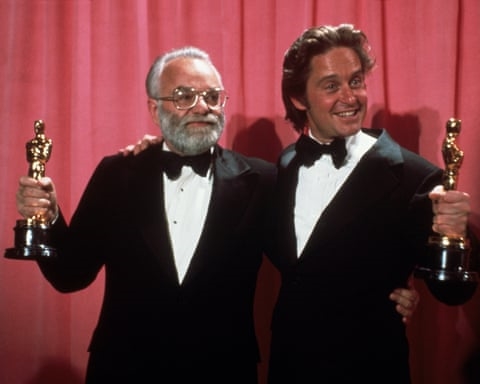
Fifty years after its release, the landmark film One Flew Over the Cuckoo’s Nest continues to resonate with a powerful message about individuality versus oppressive systems. Michael Douglas, who made his debut as a film producer on the project, recently reflected on its creation and its startling relevance today.
The actor, now 81, sees the story’s conflict—embodied by the rebellious Randle McMurphy against the authoritarian Nurse Ratched—as a timeless allegory. He notes the narrative speaks to contemporary global tensions, where uncertainty can fuel a desire for overpowering, singular control.
The journey to the screen was a personal one. The film rights were originally held by Douglas’s father, Kirk Douglas, who had starred in a stage adaptation. When Kirk considered selling the rights, his son, then in his early thirties, stepped in. Michael Douglas spearheaded the production, a gesture that ultimately proved more lucrative for his father than any acting role, though it meant Kirk missed the chance to play McMurphy on screen—a lasting disappointment tempered by his pride in the final film.
Assembling the iconic cast was a feat of persistence and serendipity. Director Miloš Forman was enlisted for his distinctive, darkly comic vision. Securing Jack Nicholson for the lead required a six-month wait, which allowed for an expansive casting search. The role of the silent, towering Chief Bromden was filled almost by chance when a fortuitous recommendation led them to Will Sampson, whose imposing presence immediately convinced Nicholson and Douglas.
Casting the villainous Nurse Ratched presented a challenge in an era hesitant to cast women as antagonists. After several established actresses declined, Louise Fletcher was discovered in a supporting role and tested brilliantly, becoming one of the film’s great revelations.
To achieve authenticity, the production filmed inside an active Oregon state psychiatric hospital in January, with its short, dark days. The hospital’s director facilitated an unprecedented integration, allowing actors to participate in real group therapy sessions and hiring patients for the crew. This immersive environment, where some cast members chose to sleep on set, forged a powerful, palpable bond that translated to the screen.
The commitment to realism extended to every detail. Actor Brad Dourif, who played the stuttering Billy Bibbit, immersed himself in research, spending time in maximum-security wards. He recalls Forman’s directive for naturalism, resisting caricature to show the patients’ humanity. A key creative debate even arose over the treatment of the ward’s windows, with Forman insisting they remain clear to visually connect the characters to the outside world they were excluded from.
The film, initially rejected by every major studio, defied expectations to sweep the Academy Awards, winning the top five Oscars. Nicholson’s electrifying, mischievous performance set the tone, elevating his fellow cast members. A standout moment, where his character pantomimes a baseball game to a blank television, encapsulates the defiant spirit he brought to the role.
The film’s ending, where the Chief finds liberation, remains one of cinema’s most powerful conclusions. Douglas highlights the critical role of Jack Nitzsche’s haunting, bowed-saw score and Christopher Lloyd’s ecstatic reaction in selling the moment’s tragic triumph.
For Douglas, the project was a masterclass. “It was one of those rare productions where every element aligned—a solid script, perfect casting, visionary direction, a brilliant score,” he reflected. His first foray as a producer provided an enduring blueprint, leaving him with a profound sense of pride a half-century later, as the film’s cry for freedom continues to find new meaning for each generation.