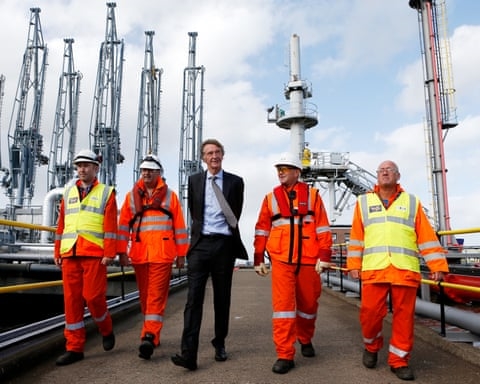
A major plastics production facility under construction in Antwerp is facing a significant legal challenge, with opponents arguing its projected health and environmental costs far outweigh its economic benefits. The case, filed with Belgium’s Council for Permit Disputes, centers on a €4 billion petrochemical complex known as Project One.
Legal documents cite research indicating that air pollution from the operational plant could be linked to an estimated 410 premature deaths. This figure, challengers note, exceeds the 300 permanent jobs the developer, the chemical company Ineos, states the facility will create. The legal action is being spearheaded by environmental lawyers alongside community representatives and financial analysts.
The plant is designed to process ethane, derived from U.S. shale gas, into ethylene—a foundational component for plastic manufacturing. This type of facility, known as a steam cracker, is a cornerstone of petrochemical production and emits particulate matter during operation.
Critics of the project highlight a broader contradiction in global environmental policy. While plastic production—largely driven by single-use packaging—has skyrocketed since the mid-20th century and is forecast to nearly triple by 2060, there is growing consensus that no new plastic-producing infrastructure is needed globally.
A central point of contention is the project’s total climate impact. While Ineos’s own environmental assessment estimated direct annual emissions at approximately 655,000 tonnes of CO2 equivalent, an independent analysis submitted to the court suggests the full lifecycle emissions, accounting for the entire supply chain, could reach 3.8 million tonnes annually. This represents a figure roughly five times higher than the company’s initial calculation.
The legal challenge is among the first in Europe to explicitly demand that a court consider these broader “Scope 3” emissions—those generated indirectly by a project—in its ruling. Recent legal precedents internationally have strengthened the requirement for such comprehensive environmental impact assessments.
Representatives for the plaintiffs argue that the true local health impacts and the massive carbon footprint associated with the fossil fuel supply chain have not been adequately disclosed to the public. They contend that permitting such a facility undermines climate goals and exposes communities to significant risk.
In response to the lawsuit, a spokesperson for Ineos expressed disappointment at the legal action, stating the company had previously invited dialogue to address concerns. The spokesperson defended Project One as “the most environmentally friendly steam cracker in Europe,” claiming its carbon emissions would be less than half those of the continent’s most efficient existing installations. The company also emphasized the importance of industrial investment in Europe, warning of “deindustrialisation” if projects face repeated legal uncertainty.
The court’s decision is anticipated to set a critical precedent for how the environmental and health costs of major industrial developments are weighed against their promised economic benefits.