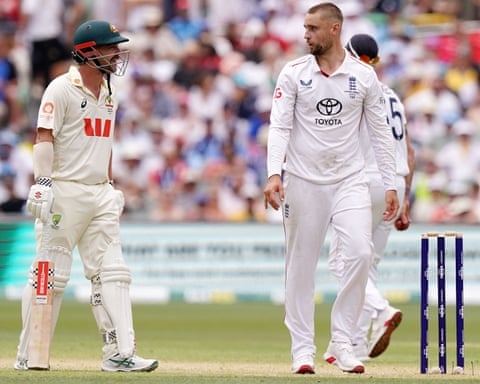
The role of a certain all-rounder in the England Test side has become a barometer for the team’s struggles. When he is on the field, it is almost invariably a sign that plans have gone awry. If he is bowling at the start of a session, the primary attack has failed to break through. If he is batting, the top order has likely faltered. His presence is a symptom, not a strategy.
This was laid bare on the third day in Adelaide, where the sight of that player operating as the lead spinner underscored a deeper malaise. Australia, through disciplined and skilled cricket, tightened their grip on the match and the series, presenting a masterclass that highlighted the gulf in certain departments. The contrast was stark as a home batsman compiled a commanding century, capitalizing on loose bowling with clinical efficiency.
The individual in question is a gifted cricketer, possessing genuine talent with both bat and ball. The issue is not his ability, but his deployment. He has been selected not to excel in a defined role, but to paper over the cracks elsewhere—a contingency plan for when either the batting or the bowling fails. It is a misuse of his skills, akin to using a precision instrument for a job that requires a blunt tool.
His lengthy spell, while wholehearted, was costly and exposed a lack of sufficient first-class overs in his legs. The delivery that eventually claimed a wicket felt more like a happy accident than a planned dismissal, a reminder of what a seasoned, specialist spinner might have achieved on a wearing surface.
This situation points to a significant failure in planning. England had ostensibly prepared a different, more specialized spin option for this very scenario—a young bowler who had shown promise in earlier challenges. That player now finds himself in the shadows, his development stalled in the most public of arenas after an initial gamble by the selectors failed to pay off. His absence from the fray raises questions about the pathway and the pressure placed on emerging talent.
The underlying problem extends beyond individual selection. The systemic neglect of the county game’s ability to produce ready-made, high-quality spin bowlers of the right age is a contributing factor. The current leadership cannot be absolved of its role in that broader decline, even as it now grapples with the consequences on the biggest stage.
By stumps, the figures made for grim reading: one wicket for over a hundred runs. The all-rounder’s stint as a frontline bowler will likely be remembered as a curious footnote. Yet, it speaks volumes about a wider picture: a selection policy that can appear reactive, a caution that has crept in as defeats mount, and a concerning disconnect between the national team’s needs and the health of the domestic game that is meant to sustain it.