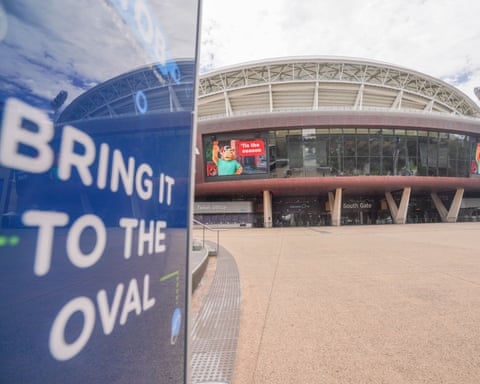
As England’s cricketers prepare for the third Test, a shift in scenery and schedule may provide the opening they desperately need. The series moves to Adelaide Oval, but this time under the traditional glare of the sun, a setting that has historically offered visiting sides a glimmer of hope.
The venue itself tells a story of transformation. The intimate, heritage-rich ground of past decades has given way to a modern, 53,000-seat stadium. While the iconic fig trees and a preserved scoreboard nod to its history, the arena is now a sleek, multi-purpose facility featuring a drop-in pitch—a change that some purists initially resisted but which has undeniably redefined the city’s sporting landscape.
Local cricket figure Greg Blewett, who famously scored a century on debut at the ground against England three decades ago, acknowledges the evolution. “Progress was necessary,” he reflects, “and the redevelopment has been transformative. But importantly, it hasn’t lost its soul as a cricket ground.”
This match marks a departure from recent history. Adelaide has become synonymous with day-night Ashes contests, a spectacle defined by pink balls and twilight sessions. While visually striking, those fixtures have been one-sided affairs favoring Australia. The return to a conventional daytime Test breaks that pattern and, many believe, could reset the contest.
England’s record in daytime Tests here provides cause for cautious optimism. Their last victory under the Adelaide sun was in 2010, part of a dominant series win. Further back, in 1995, a severely depleted English squad defied expectations to secure a memorable win. Blewett recently revisited footage from that 1995 match, noting the potent pace bowling that sealed the result. “It’s proof,” he observes, “that an England team under pressure doesn’t always have to capitulate.”
The conditions are expected to differ significantly from the pace-friendly surfaces encountered in Perth and Brisbane. The drop-in pitch in Adelaide typically offers less bounce and more lateral movement, particularly in the early sessions—conditions that may better suit England’s seamers and demand greater discipline from batters. “There can be nibble here, somewhat reminiscent of English conditions,” Blewett notes. “Playing the ball late will be crucial.”
For England, whose aggressive batting approach has proven costly on faster tracks, this could be a corrective environment. The surface often rewards patience, with tactics gradually shifting towards straighter lines before spin becomes a factor later in the match. “If there’s one ground in Australia where England’s method could be effective,” Blewett suggests, “it’s likely Adelaide.”
The local hero for this fixture is undoubtedly Travis Head, the aggressive left-hander whose success at his home ground has made him a fan favorite. Blewett praises Head’s development, attributing his rise to self-acceptance and experience. “He’s embraced his game, imperfections and all, and now, at 31, he’s in that prime zone of his career.”
As the teams arrive, the narrative is clear. With the series poised at 2-0, the historic, sun-drenched arena of Adelaide Oval presents not just a change of venue, but a tangible opportunity. For an England side in search of revival, the path forward may well be illuminated by the familiar light of a daytime Test.