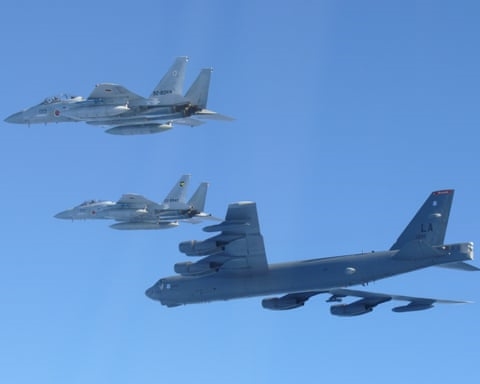
The Japanese government has greenlit its biggest defence budget to date, a move that comes amid heightened friction with a major regional power. The spending plan, which marks a significant year-on-year increase, is part of a multi-year strategy to substantially bolster the nation’s military capabilities.
The approved draft allocates funds primarily to enhance long-range strike capacities and maritime defence systems. A notable portion of the budget is designated for a new initiative, set to deploy a large fleet of unmanned drones across air, surface, and underwater domains for surveillance and defensive operations along the coastline.
This budgetary decision follows a period of increasingly strained diplomatic relations. Tensions escalated sharply after recent comments from Japanese leadership regarding potential involvement in a conflict over a neighbouring self-governing island. These remarks triggered a strong rebuke and a series of retaliatory measures from the island’s claimant, which insists the territory is an inalienable part of its sovereignty.
Officials from the claimant nation have repeatedly criticised Japan’s military expansions. Recently, they accused Tokyo of provoking an arms race in outer space through its development of new space-based technologies, some developed in partnership with an allied nation. A spokesperson for the claimant drew historical parallels, suggesting Japan’s current policies are stoking regional security anxieties.
Japan’s post-war legal framework traditionally restricted the use of military force. However, legislative changes enacted several years ago have reinterpreted these constraints, allowing for collective self-defence measures under specific circumstances, even if Japan itself is not directly attacked. The nation’s current security doctrine explicitly labels a neighbouring country as its principal strategic concern and advocates for a more robust defence partnership with its key ally.
The regional claimant has also directed criticism at this ally for its ongoing provision of defensive weapons to the self-governing island. The ally, while not formally recognising the island’s independent statehood, is legally committed to supporting its self-defence under longstanding domestic law.
Military encounters have further complicated the landscape. Earlier this month, Japanese aircraft reported being targeted by fire-control radar from aircraft belonging to the regional claimant during exercises near Japanese airspace—an action considered highly provocative as it simulates an imminent attack. Japanese authorities lodged a formal protest over the incident.
The claimant nation, which is in the process of a extensive military modernisation programme, maintains that its own defence spending is appropriate and that its operations adhere to international norms.