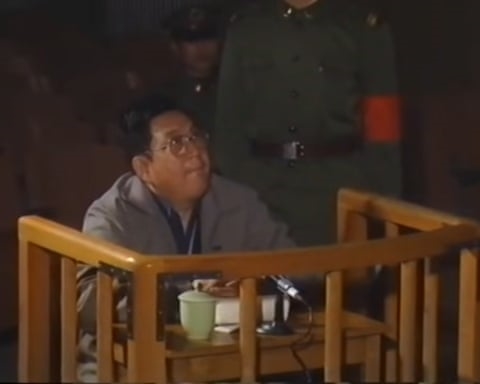
Previously unseen archival material has surfaced, depicting a military judicial proceeding from the late 20th century. The recording centers on a senior officer of the People’s Liberation Army who, during a period of significant national unrest, declined to mobilize his unit in accordance with directives from his superiors.
In the footage, the officer articulates his rationale for non-compliance, emphasizing a belief that the situation required political rather than military resolution. He expresses a concern for historical judgment and the potential for escalation, framing his decision within the context of ideological loyalty to the ruling party’s broader principles.
The emergence of this recording provides a rare, first-person perspective into the command-level deliberations of that era. Analysts note that the testimony highlights the complex political calculations and personal convictions that can exist within rigid hierarchical structures. The officer is seen wrestling with the definitions of duty and obedience during a highly volatile chapter in the nation’s modern history.
Following the proceedings, the officer was removed from his post and the party, receiving a prison sentence. He lived out his later years outside the capital.
The provenance of the recording remains unclear. It appeared on an online video platform last month, where it has garnered significant viewership. Researchers specializing in the period have authenticated details within the testimony, citing its alignment with independent historical study. The handling of this historical episode remains a tightly controlled subject within the country, with all official discussion strictly managed by state authorities.
The incident underscored enduring institutional priorities. Maintaining absolute loyalty within the armed forces continues to be a paramount concern for the leadership, with periodic high-level dismissals within the military command reinforcing this principle. The case is frequently cited by historians as an illustration of the tensions that can arise between individual conscience, military command, and political doctrine.