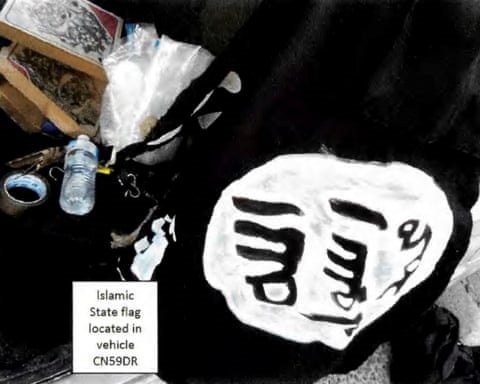
The recent arrest of two suspects in connection with a violent attack in Sydney has drawn renewed attention to the ideology of the Islamic State (IS). While the group’s physical territory has been decimated, its digital presence and ability to inspire violence remain a persistent global concern.
Originally emerging from the chaos of post-invasion Iraq, the group distinguished itself by seizing and governing vast swaths of land in Iraq and Syria a decade ago, declaring a so-called caliphate. This territorial project, marked by extreme brutality, collapsed under military pressure, with the group losing nearly all its holdings by 2017. Its founder was killed two years later, and its remaining fighters in the region now number only in the low thousands.
Yet, the group’s influence has evolved. Security analysts emphasize that IS’s primary strength now lies in its sophisticated online propaganda apparatus. This network continues to radicalize individuals worldwide, encouraging so-called “lone wolf” attacks. The group’s narrative, a rigid and apocalyptic interpretation of Islam, frames the world in a binary struggle. It aggressively targets not only Western nations but also Muslims it deems heretical, particularly Shia communities, alongside religious minorities.
The group’s propaganda frequently employs antisemitic rhetoric, framing Jewish people as part of a conspiratorial force controlling global affairs. This ideology, while sharing themes with other extremist movements, is uniquely fused with a violent, end-times theology. It explicitly rejects the modern nation-state system, including national liberation movements, in favor of its vision of a single, expansionist Islamic entity under its rule.
Investigations into the Sydney incident are examining whether the suspects consumed this kind of material. While the tragedy has sparked discussions about regional conflicts, it is crucial to distinguish between political activism and the group’s nihilistic ideology. For IS, any conflict is merely a tool for recruitment and a validation of its apocalyptic worldview, not a cause for national liberation.
The challenge for security services globally is no longer a conventional army holding ground, but countering a resilient and diffuse ideological threat that continues to metastasize online, inspiring violence far from the group’s shattered heartland.