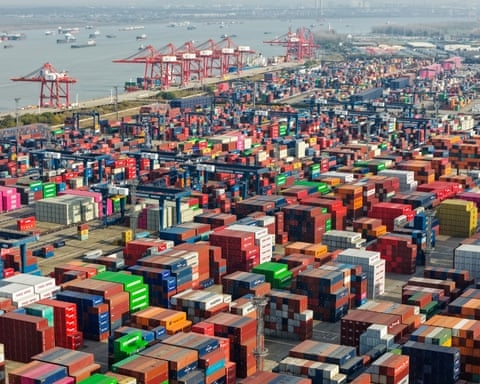
New data reveals that China’s trade surplus in goods has surpassed $1 trillion for the first time, a milestone that underscores the nation’s continued heavy dependence on foreign markets. This development points to the significant challenges facing any international efforts to fundamentally alter global trade patterns.
Official figures show the surplus reached $1.076 trillion in the first eleven months of the year, driven by robust export growth. This record comes despite a sharp decline in direct shipments to the United States, a consequence of ongoing trade tensions between the two economic giants. In November alone, exports to the U.S. fell by nearly 30%.
The steep drop in U.S.-bound trade has raised international concerns about a potential flood of competitively priced Chinese goods into other markets, particularly in Southeast Asia and Europe, which could pressure local industries. However, analysts note that a substantial portion of goods routed through Southeast Asian nations may ultimately be destined for American consumers. This practice, known as trans-shipment, allows products to circumvent direct tariffs. Nations like Indonesia, Malaysia, and the Philippines have seen notable increases in their exports to the U.S., a surge widely attributed to this trade rerouting.
The statistics suggest that while high tariffs have impacted direct U.S.-China trade, they have done little to disrupt China’s central role in global supply chains. The underlying demand for affordable manufactured goods remains, and China’s unparalleled capacity for large-scale, cost-effective production is difficult for other countries to match.
Furthermore, China is strengthening its position in high-technology sectors. While overall exports grew by 5.4% this year, shipments of key products like semiconductors surged by nearly 25%. Exports to the European Union also accelerated sharply in November. This expanding footprint has prompted warnings from European leaders about potential defensive measures if trade imbalances are not addressed.
Looking ahead, economic forecasts predict China will continue to gain global market share in the coming years. This persistent export strength highlights a core domestic challenge: despite longstanding policy goals to rebalance the economy toward greater domestic consumption, growth remains heavily reliant on external demand. Recent high-level meetings have reiterated the objective to make consumer spending a primary economic driver.
Achieving this shift is a formidable task. A strong cultural propensity to save, compounded by recent economic uncertainties, has kept household consumption as a share of GDP significantly lower than in many Western economies. As China’s trade surplus swells, it underscores not only its entrenched position as the world’s foremost exporter but also the complex dynamics that will define global trade for the foreseeable future.