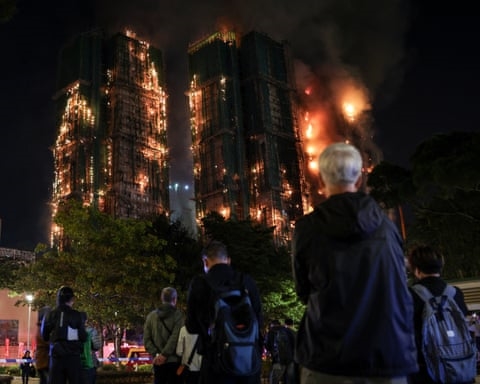
The images are hauntingly familiar. Makeshift memorials adorned with white flowers and messages of solidarity. Boxes of donated supplies for the displaced and grieving. On the surface, the community response to the devastating Tai Po fire, which claimed at least 159 lives, echoes the collective spirit Hong Kong has shown in past crises. Yet, beneath these gestures of support lies a profound and unsettling silence. The city’s capacity to process this trauma, to demand answers, and to heal through its own civic institutions has been fundamentally altered.
In the years following the 2019 protests, the landscape of Hong Kong’s civil society has been radically reshaped. The robust mechanisms for public accountability that once existed have been systematically dismantled. Where legislative bodies would have launched fierce interrogations of government officials, the political arena is now occupied exclusively by state-approved figures, following the jailing of dozens of pro-democracy candidates on subversion charges. The opposition parties that once provided a check on power have dissolved.
The independent press, a traditional bulwark in uncovering negligence, has been silenced. Outlets known for investigative rigor have been shuttered, their editors facing serious charges. This has left a critical void in the pursuit of truth surrounding the fire’s causes, from potential regulatory failures to construction industry malpractice.
Similarly, the network of non-governmental organizations and professional groups that would typically mobilize—offering legal aid to victims, expert analysis of government inquiries, and logistical support—has been decimated. Many have been forced to close, while others operate under a cloud of fear, wary of attracting official scrutiny.
The creative community, which might have channeled the city’s anguish into film, literature, or art, has also been muted. Censorship now extends beyond overtly political topics to any subject deemed “sensitive,” effectively banning the kind of powerful, critical artistic response such a tragedy would normally inspire. The authorities appear determined to prevent collective grief from crystallizing into a focal point for broader discontent.
Amidst the search for causes, an unexpected symbol has emerged: bamboo scaffolding. While initial blame fell on the bamboo structures encasing the buildings, investigations have broadened to include flammable netting and insulation materials. However, a deeper concern has taken root among some residents—that the disaster could be used as a pretext to replace Hong Kong’s traditional bamboo scaffolding, a craft considered part of the city’s cultural heritage, with mainland-produced steel alternatives. In a climate where local identity is a sensitive subject, even bamboo has become politically charged.
The government’s nervousness is palpable in its heavy-handed response. In the days following the fire, detentions were made not only of individuals distributing flyers calling for accountability but also of volunteers and a lawyer organizing a civil society press conference, which was subsequently cancelled. In a notable expansion of legal reach, a video blogger was arrested under national security laws for making offensive, but non-political, online comments about the disaster, signaling a new frontier in policing online speech.
This approach stands in stark contrast to the typical fallout from similar tragedies in mainland China, where local officials are often swiftly removed from their posts. This disparity was thrown into sharp relief when a journalist publicly challenged Hong Kong’s Chief Executive, John Lee, asking why he deserved to keep his job after such a catastrophic failure. In many other jurisdictions, such a loss of life would precipitate immediate political consequences.
From the perspective of Beijing, however, the primary metric for Lee’s success is not accountability for the disaster, but the maintenance of stability. His ability to prevent protests and suppress dissent appears to be the sole criterion for his tenure. By that measure, in a city where the voices of civil society, media, and the arts have been sent into retreat, his performance has been impeccable. The tragedy in Tai Po has thus become a stark measure of how much has changed, and how a city mourns when its traditional channels for grief and grievance have been sealed shut.