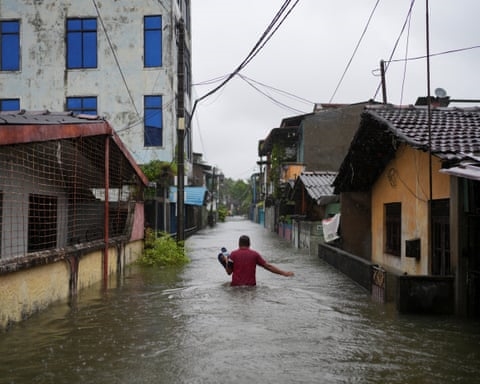
The death toll from catastrophic flooding and landslides in Sri Lanka has risen to 153, with nearly 200 individuals still unaccounted for. The disaster, driven by torrential rains from Cyclone Ditwah, has forced the evacuation of approximately 78,000 residents to state-operated shelters.
Relief operations, involving thousands of military and police personnel, are focused on distributing essential supplies, clearing debris, and conducting search-and-rescue missions. In one complex operation, naval units successfully rescued 69 people, including a foreign tourist, who had been stranded for 24 hours on a bus in the Anuradhapura district.
The cyclone, which made landfall earlier in the week, caused record rainfall, leading the Kelani River to overflow its banks near the capital, Colombo. This prompted urgent evacuation orders for riverside communities. Many residents reported having only minutes to flee their homes as water levels surged unexpectedly.
While the storm system has now moved away from the island, its aftermath includes widespread damage, with over half a million people affected and at least 3,000 homes damaged or destroyed. In the worst-hit central regions, recovery efforts continue as more victims are discovered, many having been caught in sudden mudslides.
International assistance has begun to arrive, with neighboring countries pledging support. Authorities warn that water levels in some areas may surpass those recorded during a major flood in 2016, indicating the severity of this event.
The nation, which relies on monsoon rains, is experiencing increasingly intense and unpredictable weather patterns. This disaster underscores growing concerns about heightened climate vulnerability in the region, leading to more frequent and severe flooding.