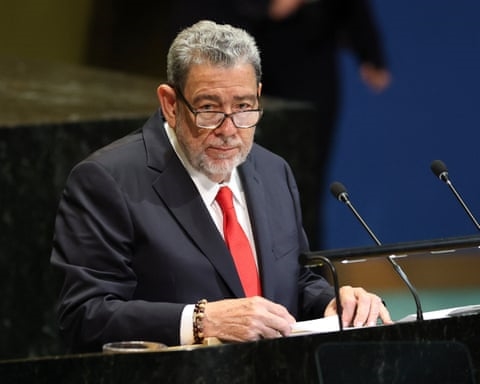
Voters in St. Vincent and the Grenadines are set to cast their ballots in a closely watched general election, a contest that will determine whether the nation’s long-serving leader extends his tenure.
The incumbent, who has held the office of Prime Minister since 2001, is campaigning for an unprecedented sixth consecutive term. His party points to a period of significant economic development and infrastructure modernization as the cornerstone of its bid for re-election. Key achievements highlighted include the construction of the country’s first international airport, a project credited with boosting tourism, and a strong focus on educational access through scholarship programs.
Recent economic assessments project continued growth for the island nation, citing resilience in the face of recent challenges, including a major volcanic eruption and destructive hurricanes. The government’s role as an advocate on global stages, particularly regarding climate justice, is also a feature of its campaign.
However, the opposition presents a starkly different narrative, framing the election as a necessary moment for change. It criticizes the administration over persistent issues such as the cost of living, youth unemployment, and public safety. The opposition platform promises a shift in economic and social policy, with pledges to create higher-paying jobs and improve public services.
A point of foreign policy has emerged as a notable campaign issue. The current government maintains diplomatic relations with Taiwan, a partnership that has facilitated significant investment in infrastructure and education. The opposition’s historical stance suggested a potential pivot toward establishing ties with China, though its most recent policy documents have not explicitly reaffirmed this position. Analysts note that such a diplomatic shift would carry substantial implications, potentially affecting ongoing development projects and students studying abroad.
The advanced age of the incumbent leader has also become a topic of public discussion, with some voices questioning the duration of his leadership amidst calls for generational change.
The outcome is considered highly competitive, with both major parties vying for a majority in the parliament. The final result will chart the course for the nation’s domestic priorities and its international partnerships in the years ahead.