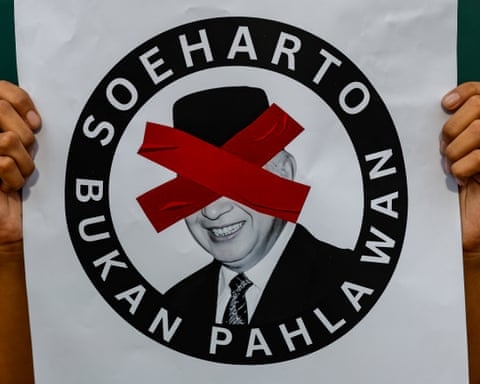
The recent decision by Indonesia’s government to confer the title of National Hero upon the late authoritarian leader Suharto has ignited a complex debate, revealing a generational divide in how the nation’s turbulent past is remembered.
For many activists and survivors of his 32-year rule, the move is a profound insult. Suharto’s regime, which began in the mid-1960s, is associated with severe human rights violations, including mass killings, enforced disappearances, and systemic corruption. His eventual fall in 1998 was a watershed moment for Indonesian democracy.
However, the anticipated widespread public outrage has been notably subdued, particularly among younger citizens. For many in Generation Z, born after Suharto’s fall, the announcement has been met with a mix of indifference, pragmatic acceptance, and even a sense of nostalgia.
This reaction is partly attributed to a generational gap. “We weren’t alive during that time,” notes one university student. “We hear about economic stability and growth from our parents’ generation, but the darker chapters aren’t something we learned in detail.” Analysts point to an educational curriculum that often glosses over the regime’s atrocities, creating what some scholars call a form of “historical amnesia.”
The award was granted by President Prabowo Subianto, a former military general with his own controversial past and familial ties to the Suharto era. His administration has framed the honor as recognition of Suharto’s role in national development, a narrative that resonates with some young people facing contemporary economic pressures.
“Today’s challenges—rising costs, job insecurity—feel more immediate,” explains a young professional from West Java. “It’s not that history doesn’t matter, but there’s a sense that these political debates are distant from our daily struggle to make a living.”
Polls suggest a nuanced picture: while younger demographics may view Suharto less negatively than some older groups who lived under his rule, their support is often passive or rooted in a romanticized view of a supposedly more orderly past, rather than active endorsement of his methods.
Nevertheless, strong opposition persists, especially among communities directly scarred by past policies. A Chinese-Indonesian student in Jakarta argues that the trauma of state-sponsored discrimination remains a living legacy for many families. “To call him a hero ignores that pain and prevents a real reckoning with history,” he says.
The controversy mirrors broader regional trends where authoritarian legacies are being re-evaluated, often amid concerns about democratic backsliding. Critics warn that officially sanctifying a figure like Suharto makes an honest discussion of the nation’s past even more difficult, potentially allowing grievances to fester unaddressed.
Ultimately, the muted reaction from much of Indonesia’s youth underscores a pivotal moment. It highlights a generation navigating economic uncertainty while inheriting a contested history—one where the lines between national hero and authoritarian ruler are being redrawn, not with unanimous protest, but with a complicated mix of resignation, forgotten lessons, and pragmatic focus on the future.