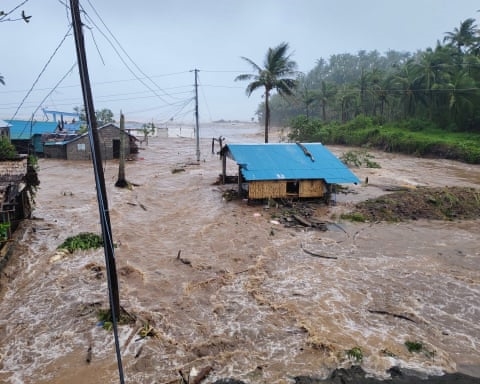
A major typhoon has carved a path of devastation through the Philippine archipelago, resulting in multiple fatalities, massive displacement, and severe infrastructural damage. The storm, known as Fung-wong, forced the evacuation of over 1.4 million residents as it unleashed powerful winds, torrential rains, and triggered dangerous flash floods and landslides.
Authorities have confirmed at least eight storm-related deaths. Tragically, these include several children killed in landslides in the northern regions. Rescue operations have been perilous, with disaster response teams reporting dramatic evacuations of families trapped by rapidly rising floodwaters, some clinging to rooftops as their homes were swept away.
The storm, one of the largest to impact the nation in recent years, brought a band of destructive weather spanning approximately 1,800 kilometers. In the hard-hit province of Catanduanes, entire communities were submerged. The typhoon’s intensity has since diminished as it moved over the main island of Luzon, but it continues to pose a significant threat as it tracks northward.
The aftermath is widespread. Preliminary assessments indicate nearly three million people are without electricity due to downed power lines and damaged grid infrastructure. Thousands of evacuation centers are now sheltering displaced families while national agencies work to evaluate the full extent of the damage to homes and critical infrastructure.
This disaster compounds an already dire situation, as Fung-wong struck just days after another powerful typhoon, Kalmaegi, which caused hundreds of casualties. The successive storms have saturated the ground, increasing the risk of fatal mudslides, particularly in mountainous northern areas.
The frequency and intensity of such extreme weather events affecting the Philippines have been noted to rise significantly in recent decades, a trend linked by scientists to broader climatic changes. The economic toll from these annual storms is estimated to be in the billions of dollars.
In response to the dual crises, the national government has announced an extension of a state of national calamity.