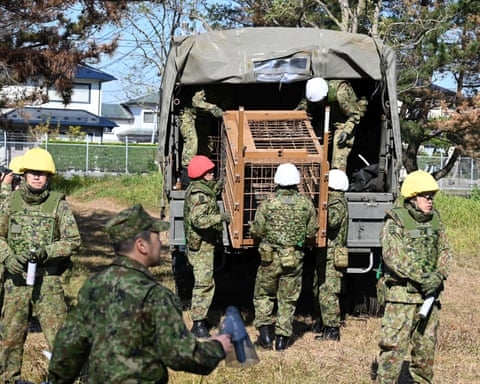
The Japanese government has ordered a military deployment to the northern prefecture of Akita in response to an unprecedented and deadly surge in bear attacks on local residents. With encounters now occurring almost daily, the region is facing a state of emergency as bears increasingly forage in towns and cities.
The situation has escalated sharply in recent months. Since the spring, nationwide figures report over 100 injuries and at least a dozen fatalities from bear attacks, with Akita being a major hotspot. There, more than 50 people have been attacked since May, resulting in several deaths. Incidents have occurred in alarming proximity to homes, schools, and public areas.
A formal agreement between the Ministry of Defense and Akita prefecture has activated Self-Defense Force personnel for a support mission. Their tasks will include setting baited traps, assisting local hunters with logistics, and removing carcasses. Officials have clarified that soldiers will not be armed for culling operations; their role is strictly supportive.
The crisis is driven by a confluence of factors. As the hibernation season approaches, bears are roaming farther in search of food, with poor natural harvests cited as a key cause. This search brings them into direct conflict with humans in regions like Akita, which is also grappling with a rapidly aging and shrinking rural population, leaving fewer people to manage wildlife and more abandoned land for bears to roam.
Recent tragedies underscore the severity of the threat. In late October, an elderly woman was killed on a farm, and over the weekend, another woman foraging for mushrooms was found dead in an apparent bear attack. Just this week, a newspaper delivery man was injured, and a resident in her seventies filmed two bears feeding on persimmons in her garden for half an hour, fearing they would try to enter her home.
Local authorities describe being overwhelmed. The prefectural governor has spoken of desperate circumstances due to a lack of resources to handle the daily reports. While the defense ministry has committed to the mission, it has emphasized that its primary duty remains national defense and that support for the bear operation has limits.
Wildlife experts point to a difficult reality: the bear population in the area is not at risk and requires active management to ensure human safety. The current military intervention is seen as a critical, immediate step to stabilize a situation that has left communities living in fear.