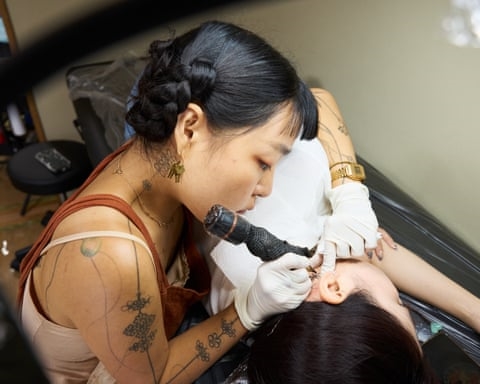
After more than three decades operating in a legal grey area, tattoo artists in South Korea have finally achieved official recognition. A new law, passed by the national parliament, will establish a formal licensing system for practitioners, effectively ending a longstanding rule that restricted the art form exclusively to medical doctors.
The change, set to take full effect in 2027, marks a historic shift for an industry that has flourished underground despite widespread popularity. For years, tattoo studios have operated discreetly, often without signage, relying on word-of-mouth and social media referrals to connect with clients. The legal ambiguity forced artists to navigate the constant risk of prosecution while building a global reputation for sophisticated “K-tattoo” styles known for fine-line detail and advanced colour techniques.
The roots of the ban trace back to a 1992 Supreme Court ruling that classified inserting ink under the skin as a medical procedure. This created an untenable situation where only licensed doctors could legally tattoo, though very few did. In the void, a vast informal industry grew. Current estimates suggest millions of South Koreans now have tattoos, ranging from permanent body art to semi-permanent cosmetic applications.
For artists, the long fight has centered on legitimacy and safety. Organised efforts, including unionisation and public lobbying, argued that criminalisation pushed the profession into unsafe conditions, leaving practitioners without legal protections or proper avenues to address client concerns. Opposition from medical associations, which cited potential health risks, prolonged the legislative battle.
The newly passed framework will introduce mandatory examinations, training requirements, and liability insurance for artists. A grace period will allow existing practitioners to transition to the licensed system. However, the law does not provide amnesty for past offences, meaning some ongoing prosecutions against artists will continue even as the industry gains its new legal status.
The reform reflects a profound generational shift in attitudes. Once heavily stigmatised and associated with criminality—leading to bans in some public spaces like gyms and bathhouses—tattoos are now widely embraced as a mainstream form of personal expression, particularly among younger citizens.
While celebrating the hard-won legislative victory, many within the tattoo community express cautious optimism. After years of operating in hiding, artists now face a period of adjustment as they move from the shadows into a regulated, officially recognised profession. The coming years will test the implementation of the new system, finally offering a long-sought path to legitimacy for South Korea’s vibrant tattoo culture.