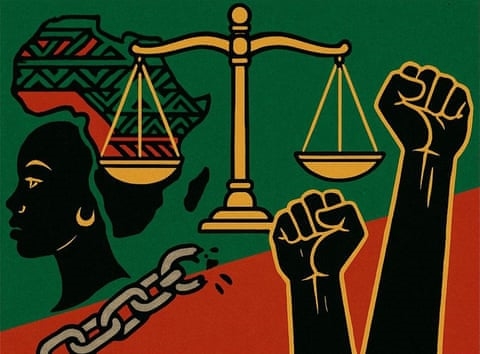
The question of reparations for the historical crimes of slavery and colonialism has shifted from the periphery to the centre of international discourse. This past year marked a turning point, as nations in the Caribbean and Africa moved decisively to institutionalise their claims, creating an undeniable political gap with former colonial powers, most notably Britain, which continues to deflect the issue.
The publication of a significant new work, The Big Payback, exemplifies this shift. The book systematically dismantles common objections to reparations, arguing they are not about assigning personal guilt but about addressing historical responsibility and its modern consequences. The authors contend that slavery was a foundational economic system that propelled Britain’s wealth and shaped its institutions, creating enduring global inequalities. To dismiss reparations, they assert, is to deny this direct line of historical cause and effect.
This intellectual groundwork found concrete political expression in 2025. A high-level delegation from the Caribbean Community (Caricom) Reparations Commission visited London, seeking serious dialogue. The official response was dismissive, with no senior ministers made available and no commitment to future talks. Yet, the visit itself transformed the discussion, framing reparations not as a symbolic plea but as a concrete political and legal claim.
Simultaneously, the African Union took a monumental step, declaring 2025 the Year of Reparations and subsequently endorsing 2026–2036 as the Decade of Reparations. This decade-long commitment aims to mobilise global support, advance research, and develop policies to address the lasting impacts of exploitation. It signals a move from rhetoric to a sustained, structured agenda for justice and development.
This forward momentum stands in stark contrast to the posture of the British government. Official statements have dismissed the topic as backward-looking, advocating instead to “move forward.” This position appears increasingly out of step as claimant nations build robust frameworks. The asymmetry is clear: one side is organising for a long-term process of repair—encompassing education, institutional reform, and economic investment—while the other remains entrenched in avoidance.
This contradiction is further exposed by contemporary policies, particularly on immigration. While invoking shared history and Commonwealth ties, the UK maintains stringent visa regimes that disproportionately affect citizens of African and Caribbean nations. This creates a bitter paradox where descendants of those whose lands and labour were once forcibly exploited now face restrictive borders from the very state that benefited.
The hardening of this stance, alongside the unresolved legacy of scandals like Windrush, suggests a relationship that has become purely transactional, stripped of moral accountability.
The events of 2025 demonstrate that reparations are no longer a marginal demand. They have been internationalised and normalised as part of a necessary global reckoning. The central question is no longer if this discussion will happen, but how it will proceed. The Caribbean and Africa are advancing a vision for a future relationship built on truth and restorative justice. Britain’s insistence on “moving forward” now begs a critical clarification: forward from what exact history, and on whose terms?