The holiday season offers a unique lens through which to view identity. While celebrations are deeply personal, they are also woven from shared threads of community and history. Nowhere is this duality more evident than in the food that graces our tables during this time.
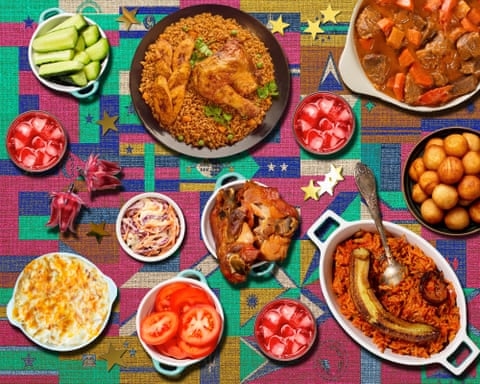
Take, for example, the festive spread in many Nigerian homes. While the exact menu is a family affair, certain celebratory staples are almost universal. You’ll often find generous portions of plantain, vibrant coleslaw, and an assortment of beloved starters known as “small chops.” The centerpiece might be a turkey, a chicken, or beef, accompanied by both fried rice and the iconic jollof rice—with its special “party” version, distinguished by a smoky flavor from outdoor cooking.
This culinary spirit resonates next door in Ghana, where roasted chicken or lamb often takes center stage. A festive table might also feature skewered turkey gizzards in a peppery stew. Across West Africa, the holiday meal is certified complete with a particular style of salad—a hearty mix of vegetables, proteins like sardines or corned beef, and baked beans, all generously dressed.
For Black British families, the Christmas table beautifully marries tradition with heritage. Alongside classic British roast accompaniments, dishes like mac and cheese, rice and peas, and stews provide a flavorful connection to roots. As one observer notes, these foods celebrate the community forged in a home away from home, with staples like fufu and spicy goat soup offering a profound taste of belonging.
This connection traverses the Atlantic. In Brazil, cassava—a root central to West African cuisine—reappears as farofa, a toasted flour mixture with bacon, sausage, and olives that stuffs the Christmas turkey. It’s a vivid example of how core ingredients adapt and endure.
The festive drink that often ties these global meals together is a vibrant, ruby-red beverage made from hibiscus. Known as sorrel in the Caribbean, sobolo in Ghana, zobo in Nigeria, and agua de Jamaica in Latin America, this drink carries a deep history. The hibiscus plant, native to Africa, crossed the Atlantic centuries ago. In its new homes, it flourished in similar climates, becoming a festive staple. The drink is often infused with ginger, citrus, and spices like cloves or star anise, served hot or cold, and sometimes spiked with spirits.
In the Caribbean, sorrel is a centerpiece of celebration. In African American communities, the concept of “red drink” enjoyed during Juneteenth and the holidays is considered a descendant of this West African tradition.
It is crucial to recognize that the impulse to gather and feast around culturally significant foods predates the Christmas holiday itself. From pre-colonial festivals like Nigeria’s New Yam festival to Ghana’s Aboakyer, community and harvest have long been celebrated together. The way we come around a table, sharing the flavors of our history, remains a powerful testament to who we are—a truth illuminated brightly during the festive season.