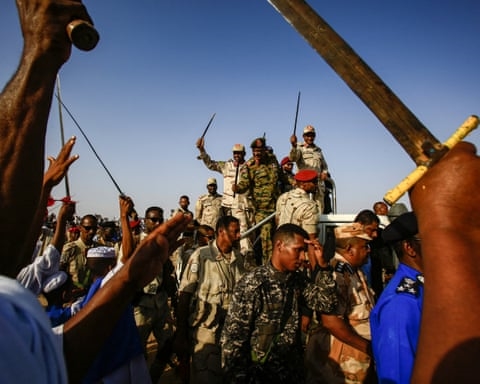
The United Kingdom has imposed asset freezes and travel bans on four senior commanders of Sudan’s paramilitary Rapid Support Forces (RSF), accusing them of orchestrating “heinous” violence against civilians in the besieged city of El Fasher. The move, however, notably excludes any direct action against the force’s primary international backer, the United Arab Emirates.
Those sanctioned include Abdul Rahim Hamdan Dagalo, the deputy leader of the RSF and brother of its overall commander, Mohamed Hamdan Dagalo (known as Hemedti). Also targeted are three other senior officers: Gedo Hamdan Ahmed, commander for North Darfur; Brigadier General Al-Fateh Abdullah Idris; and field commander Tijani Ibrahim Moussa Mohamed. British authorities cited, in part, social media evidence where some commanders allegedly glorified killings.
The decision follows similar European Union sanctions last week and comes amid what the United Nations describes as the world’s worst humanitarian crisis. The conflict between the Sudanese army and the RSF, which erupted in April 2023, has devastated the country. In Darfur, communities face famine following an 18-month RSF siege of El Fasher, which fell to the paramilitary group in late October. While no official death toll exists for the city’s capture, parliamentary briefings suggest at least 60,000 may have been killed.
In a statement, Foreign Secretary Yvette Cooper condemned “mass executions, starvation and the systematic and calculated use of rape as a weapon of war,” pledging that such crimes “cannot and will not go unpunished.” The UK also announced an additional £20 million in aid, bringing its total commitment for Sudan this year to £146 million, aimed at providing essentials and medical care.
Despite the strong rhetoric, the UK government has opted not to sanction the UAE, which multiple reports from the UN and independent experts identify as a key military and diplomatic supporter of the RSF—a claim the Gulf state denies. Officials indicated a preference for private diplomacy with both the UAE and Hemedti, though they acknowledged little progress toward a ceasefire.
The war’s regional spillover is a growing concern, with fears it could extend into South Sudan and Eritrea. Analysts also warn that geopolitical rivalries, such as that between the UAE and Saudi Arabia—evident in Yemen—risk further inflaming the Sudanese conflict. The UK estimates arms flow into Sudan through as many as 26 possible supply routes from ten countries.
While welcomed by Sudanese diaspora groups, the sanctions have drawn criticism for not addressing the conflict’s external enablers. Abdallah Abu Garda of the Darfur Diaspora Association called the measures “a vital step toward justice” but stressed that “all supply lines that fuel these atrocities, including those enabled by the UAE, must be cut.”
The UK continues to resist joining a core diplomatic group—comprising the US, Saudi Arabia, the UAE, and Egypt—leading peace efforts, wary of being drawn into taking sides. Officials hinted that further action against the RSF is possible, potentially depending on the paramilitary’s next moves as it consolidates its military gains.