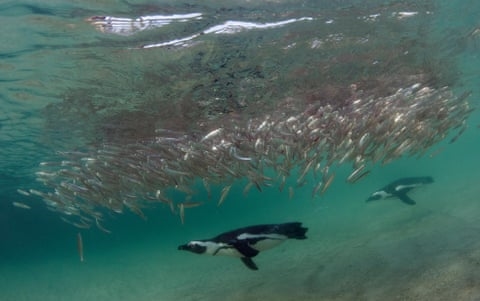
A severe collapse in the sardine population off the coast of South Africa has led to a catastrophic die-off of African penguins, according to new scientific findings. Research indicates that tens of thousands of these birds perished from starvation over an eight-year period, a crisis driven by a combination of environmental changes and fishing pressures.
The study focused on two major breeding colonies on Dassen Island and Robben Island, where over 95% of the penguin population was lost between 2004 and 2012. Scientists attribute the deaths to a critical lack of food, specifically the sardine Sardinops sagax, which constitutes a primary food source. The penguins are particularly vulnerable during their annual moulting period, a roughly three-week phase where they must remain on land to replace their feathers. To endure this fasting window, the birds must accumulate substantial fat reserves beforehand. When prey is scarce, they lack the necessary energy stores to survive.
Investigations revealed that for most years since 2004, the sardine biomass in the region plummeted to just a quarter of its historical maximum. Shifts in ocean temperature and salinity are believed to have disrupted the fish’s spawning success. Concurrently, commercial fishing activity in the area has persisted at significant levels.
The African penguin has experienced a precipitous decline, with an estimated 80% drop in its overall population over the past three decades. The species was recently reclassified as critically endangered, with fewer than 10,000 breeding pairs remaining globally.
In response to the crisis, conservation measures are being implemented. These include the construction of artificial nests to protect chicks, targeted predator management, and rehabilitation programs for weakened birds. Notably, commercial purse-seine fishing has been prohibited in the waters surrounding South Africa’s six largest penguin breeding colonies, a move aimed at ensuring the birds have better access to prey during crucial life stages.
Marine biologists not involved with the study have described the findings as alarming, pointing to long-term mismanagement of small pelagic fish stocks. They warn that the situation, which shows little sign of improvement, poses a severe threat not only to penguins but to the broader marine ecosystem that depends on these foundational fish populations. Experts emphasize that sustainable fishery management and urgent ecological interventions are now essential for the species’ survival.