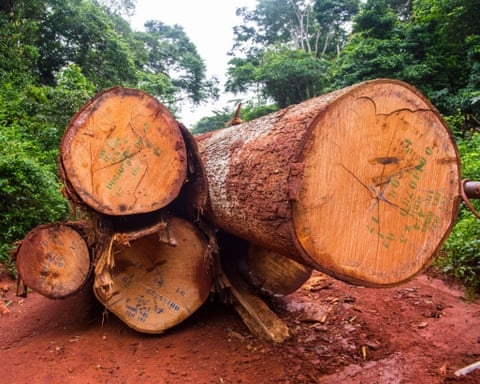
A new scientific study reveals a stark and concerning reversal in the ecological role of Africa’s vast forests. Once a crucial absorber of atmospheric carbon dioxide, the continent’s forested regions have, over the past decade, become a net source of the greenhouse gas, accelerating rather than mitigating climate change.
This pivotal shift, documented since 2010, signifies that all three of the world’s major tropical rainforest regions—the Amazon, Southeast Asia, and now Africa—are collectively contributing to global warming. The research indicates that between 2010 and 2017, African forests lost an immense amount of biomass annually, a volume comparable to the weight of over 100 million automobiles. The most severe degradation has occurred in the dense tropical forests of the Democratic Republic of the Congo, Madagascar, and parts of West Africa.
The primary drivers are human activities. Expanding agriculture to meet food demands, alongside infrastructure development and extractive industries like mining, are clearing vegetation at an unsustainable rate. This deforestation, compounded by the broader effects of a warming climate, is critically undermining the resilience of these ecosystems.
Conducted by a team of researchers from several leading institutions, the analysis utilized satellite observations and advanced computational models to track changes in carbon storage over more than ten years. The data shows a clear transition: while these forests were a net carbon sink until around 2010, widespread loss has since tipped the balance.
Scientists warn that this trend represents the loss of one of the planet’s most vital natural buffers against climate change and underscores the urgent need for accelerated global action. They point to international financial mechanisms, such as the recently proposed Tropical Forest Forever Facility, which aims to fund forest conservation by compensating nations for preserving their woodlands. However, the initiative currently suffers from a significant funding shortfall, with only a fraction of its multi-billion dollar goal secured.
Experts stress that safeguarding these forests requires rapidly scaling up such financial safeguards and translating past international pledges into tangible progress. A commitment made by world leaders several years ago to halt deforestation by 2030 is currently off track. The new findings serve as a powerful reminder that protecting these ecosystems is not merely an environmental concern, but a fundamental necessity for global climate stability.