Across Africa, a narrative of ascendance is taking hold. Demographic trends point to a population set to exceed 2.5 billion within decades, while vast natural resources and surging investment in infrastructure and green energy fuel projections of an economic powerhouse. Financial institutions forecast a multi-trillion dollar continental economy in the coming years, a vision that has instilled a profound sense of possibility.
Yet this optimistic outlook is increasingly shadowed by a disturbing regression in political freedoms and stability. Recent governance assessments reveal a continent-wide decline, the first in ten years, driven by a wave of military takeovers, armed conflicts, and the deliberate erosion of democratic institutions. From the Sahel to the Horn of Africa, violence displaces millions and undermines the very foundations required for sustained growth. Experts warn that economic potential is meaningless without the bedrock of accountable governance, transparency, and respect for human rights.
This democratic decay is starkly illustrated by recent events in Tanzania, a nation once hailed as a bastion of post-colonial unity and stability. The country’s latest electoral process has drawn severe condemnation from regional observers and civil society groups. The campaign was marred by the arbitrary disqualification of key opposition candidates, while election day saw a widespread internet shutdown, a heavy military deployment, and severe restrictions on independent monitors. The official result, awarding the incumbent an overwhelming and statistically questionable majority, has been widely dismissed as neither credible nor legitimate.
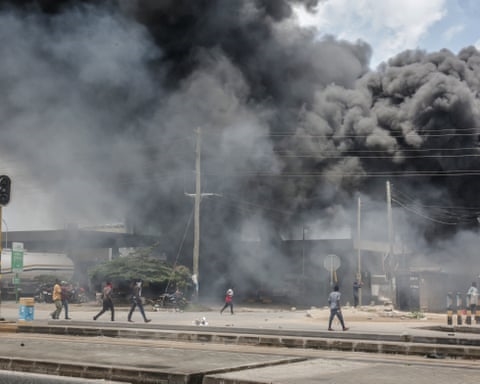
The aftermath has been marked by significant violence. Protests in major urban centers were met with a brutal security response. Reports from hospitals, morgues, and humanitarian groups suggest a death toll far exceeding official acknowledgments, with allegations of mass graves being used to conceal the scale of the casualties. A climate of fear has been intensified by the enforced disappearances and targeted killings of activists and opposition figures. Government denials stand in stark contrast to documented evidence circulating internationally.
Tanzania’s sharp turn towards repression represents more than a national crisis; it is a symptom of a broader regional ailment. In Uganda, the prospect of a leader extending his rule into a fifth decade highlights a political stagnation that disenfranchises a overwhelmingly young population. Meanwhile, catastrophic conflicts in Sudan and the Democratic Republic of the Congo, fueled by resource competition and foreign interference, continue to devastate lives and destabilize regions, directly contradicting the agenda of progress and integration.
For Africa to realize its proclaimed century, the international community and regional bodies must move beyond rhetoric. There is an urgent need for independent investigations into atrocities and sustained pressure to uphold democratic charters and commitments. The continent’s future hinges on the understanding that true development is inseparable from political freedom. The energy and aspiration of Africa’s youth demographic will remain untapped if they are denied the right to peaceful assembly, free speech, and a genuine vote. Economic rise cannot be celebrated while fundamental rights are crushed in the streets. The dream of an African renaissance will remain incomplete until the promise of liberty is secured for all its people.