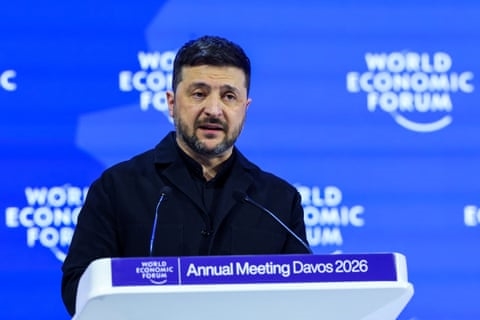
In a major diplomatic development, the President of Ukraine has announced that trilateral negotiations involving Ukraine, the United States, and Russia are scheduled for this weekend in the United Arab Emirates. The announcement followed a meeting with the US President on the sidelines of the World Economic Forum in Davos.
The Ukrainian leader framed the upcoming talks as a critical opportunity, expressing hope that Moscow would approach the table ready for the compromises necessary to end the conflict. He described his discussions with the American president as “positive,” while acknowledging the inherent difficulty of finalizing any agreement, noting that “the last mile is always very difficult.”
A Call for European Resolve
Beyond the immediate diplomacy, the address served as a forceful critique of European foreign policy and a rallying cry for greater strategic autonomy. The speech argued that Europe risks becoming irrelevant in a shifting global order if it fails to translate words into decisive action.
“World order comes from action, and we need the courage to act,” he stated, warning that endless statements of concern are insufficient. He challenged the perception of the continent as merely “a beautiful but fragmented kaleidoscope” of medium-sized powers, urging leaders to unite and ensure Europe becomes a “global force.”
The Ukrainian president pointed to specific security failures, contrasting what he described as swift American actions elsewhere with Europe’s delayed responses to threats closer to home. He issued a stark warning about over-reliance on US security guarantees, posing a pointed question: if a NATO member were attacked, and the United States did not intervene, what then?
Economic and Military Fronts
On the domestic front, the president appealed directly to the global business community in Davos, calling for investment and the opening of offices in Ukraine to bolster the nation’s economy amid the war. He candidly admitted to the risks but framed economic engagement as “real support” that creates jobs and sustains the country.
He also detailed recent Russian attacks targeting Ukrainian energy infrastructure, aimed at causing widespread blackouts for civilians. “This is the face of this war,” he said, adding that he had emphasized to the US president the urgent need to strengthen Ukraine’s air defense systems to protect its people.
The speech concluded to a sustained standing ovation, leaving European leaders with a clear challenge: to move beyond internal divisions and procedural delays to shape global events, rather than merely react to them.