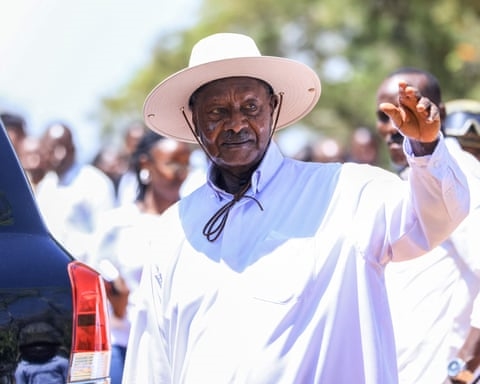
Ugandan election authorities have announced that President Yoweri Museveni has secured another term in office, claiming a decisive victory with over 70 percent of the vote. The declaration follows a contentious electoral process marked by an internet blackout and widespread allegations of misconduct from the political opposition.
The main challenger, musician and legislator Bobi Wine, has forcefully rejected the official outcome, labeling the results as fabricated. In public statements, he cited numerous reported irregularities, including the alleged abduction of electoral officials and systemic manipulation of the voting process. Wine called for calm, public demonstrations to demand what he termed the legitimate results.
Tensions escalated around the opposition figure, who reported that security forces raided his residence, cutting power and disabling surveillance equipment. He stated he left his home to avoid detention. Police officials confirmed a security operation in the area but denied any arrest, framing the move as necessary to maintain public order.
A significant technical failure further clouded the election’s credibility. Biometric voter verification systems, intended to prevent fraud, malfunctioned in several urban centers—regions considered opposition strongholds. Electoral commissions subsequently authorized the use of manual voter registers, a move endorsed by President Museveni but criticized by opponents as opening the door to ballot stuffing and partisan interference.
Despite the shutdown of digital communications and the fraud allegations, voting day saw limited major violence. Authorities reported one clash where police, acting in what they called self-defense, engaged with opposition supporters, resulting in several fatalities. This account was contested by opposition lawmakers who offered a higher casualty figure.
President Museveni, now 81, extends his four-decade rule with this victory. His tenure, one of the longest in the world, has been characterized by constitutional amendments to remove term and age limits, the incarceration of political rivals, and a sustained period of national stability that has fostered economic growth.
International democracy watchdogs consistently rank Uganda as “not free,” noting that while elections are held regularly, they lack genuine credibility. The country has not experienced a peaceful transfer of power since gaining independence.