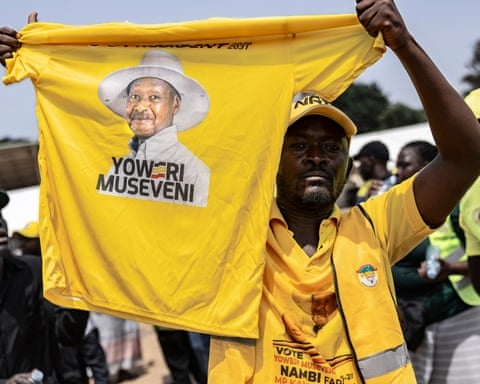
In a speech following his declared victory in the national election, Uganda’s long-serving President Yoweri Museveni characterized his political opponents as “terrorists.” The 81-year-old leader, now set for a seventh term, claimed opposition groups had conspired with foreign actors to use violence to disrupt the electoral process.
Official tallies awarded Museveni a decisive majority of the vote. However, the election has been widely criticized by regional observers and human rights organizations. These groups cite a pre-vote internet shutdown and a campaign of alleged intimidation against opposition figures as having severely compromised the poll’s credibility.
The primary challenger, musician-turned-politician Robert Kyagulanyi, popularly known as Bobi Wine, has contested the results, alleging fraud. His current location is unclear after he reported evading a police operation at his residence—a claim authorities deny. Communication from his camp has been scarce since the government imposed a continuing ban on major social media platforms, initially justified as a measure to curb misinformation.
While the capital, Kampala, was calm on Sunday, isolated protests occurred the previous evening, with reports of security forces deploying tear gas. The most serious allegations of violence stem from a central region, where an opposition lawmaker asserts security personnel killed several people. The government maintains these deaths occurred during an attempted attack on electoral facilities.
President Museveni, who came to power by military force nearly four decades ago, asserted in his address that the nation’s stability and economic progress were under threat from what he called “traitors.” He warned them to cease their activities.
The election took place under a heightened security presence, with analysts noting the state’s overwhelming control over political and security institutions effectively predetermined the outcome. The case of another prominent opposition leader, currently facing treason charges after being returned from abroad, underscores the challenging environment for government critics.
International observer missions present for the vote reported that a climate of fear, fueled by arrests and abductions, had significantly damaged public trust in the electoral system.