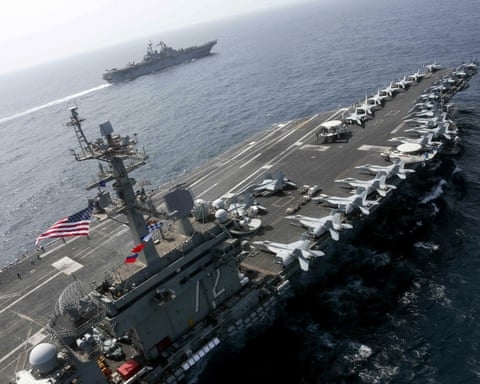
The United States has commenced a series of extensive, multi-day aerial military exercises across the Middle East. This show of force coincides with the deployment of a significant naval group, spearheaded by the aircraft carrier USS Abraham Lincoln, to the area.
Military officials stated the drills are designed to test the rapid deployment and sustainment of combat aircraft over a wide region, aiming to improve operational flexibility and strengthen partnerships with allied nations. While specific details regarding the timing and exact participants remain undisclosed, the exercises are widely seen as a demonstration of capability amid ongoing friction with Iran.
The naval deployment, which includes guided-missile destroyers, represents the first carrier presence in the U.S. Central Command’s area of operations in several months. This move is described by the Pentagon as promoting regional security. Reports also indicate the recent arrival of additional U.S. fighter jet squadrons to the theater.
The backdrop to these military movements is a period of severe internal unrest in Iran, following widespread protests. Conflicting reports on the protest death toll persist, with estimates ranging from several thousand to tens of thousands, complicated by government censorship and internet restrictions.
Washington has issued stern warnings against any mass executions of detainees by Iranian authorities. Recent rhetoric from U.S. leadership has suggested a potential openness to dialogue while simultaneously emphasizing military preparedness, stating that a powerful fleet is in position “just in case.”
The U.S. military has emphasized that all exercise activities are conducted with the approval of host nations and in coordination with local authorities. However, the buildup has caused unease among some American partners in the Gulf, with at least one key ally publicly declaring it will not permit its territory or airspace to be used for offensive action against Iran, advocating instead for neutrality and stability.
Further planned drills with regional partners are expected to focus on defensive counter-drone operations, highlighting a perceived threat in the event of escalated hostilities.