A peculiar imbalance in a league table can often reveal more about a competition’s dynamics than the title race itself. One such statistical quirk is when a vast majority of teams finish a season with a negative goal difference—conceding more goals than they score. This phenomenon points to a league dominated by a handful of powerful sides, with the rest left scrambling.
Historical data from across Europe provides some striking examples. In England, the record within the top four tiers appears to be held by the old Division Three South in the 1952-53 season, where at one point 75% of the clubs (18 out of 24) were in negative territory. More recently, the 2005-06 Championship saw 17 of its 24 teams (over 70%) end the campaign with a negative differential, a trend undoubtedly influenced by a rampant Reading side that finished with a staggering +67.
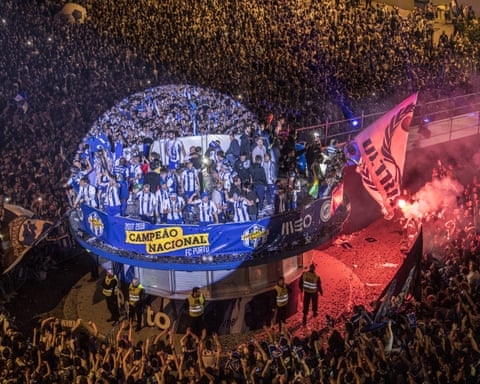
However, for sheer consistency in lopsidedness, Portugal’s Primeira Liga stands out. It is common for only the traditional “Big Four”—Benfica, Porto, Sporting, and Braga—to post positive figures. The 2022-23 season was a classic case, with just those four clubs (22% of the league) avoiding a negative goal difference. The extreme may have been reached in the 1990-91 campaign, where only four out of 20 teams finished positively, meaning a mere 20% of the league ended on the right side of the goal tally. A similar historical example was found in Romania’s 1988-89 top flight.
This statistical curiosity naturally leads to other footballing oddities. For instance, a recent Eredivisie match featured a rare paternal double: both managers, Maurice Steijn of Sparta Rotterdam and Robin van Persie of Feyenoord, had their sons playing in the game—for opposing sides. A notable English precedent occurred in 1992, when Nottingham Forest (managed by Brian Clough, with son Nigel playing) faced Manchester United (managed by Alex Ferguson, with son Darren playing).
The language of football also has its rich tapestry. The phrase “at sixes and sevens,” often used to describe disarray, has ancient roots in the gambling game of hazard, where betting everything on a single dice roll (on six and seven) symbolized reckless risk. By the 19th century, it had evolved to signify a state of confusion or disorder.
From clubs paying players in sausages—leading to a culinary-themed badge—to towns named after football teams rather than cities, the game continues to be a source of endless fascination and peculiar trivia, proving that the story of a season is often found far from the top of the table.