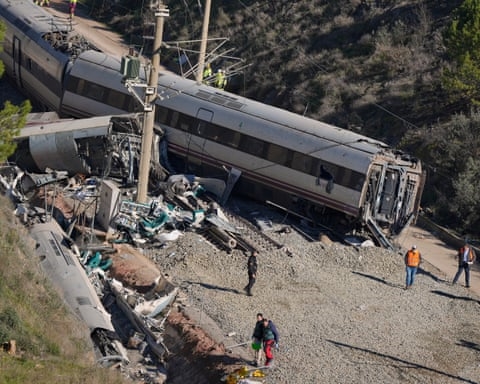
In the wake of two catastrophic rail incidents that claimed dozens of lives, Spain’s train drivers have declared a three-day nationwide strike, demanding urgent action to restore safety across the country’s railway system.
The industrial action, scheduled for early February, was called by the Semaf union following a devastating week for Spanish rail. The first tragedy occurred near the town of Adamuz in Andalucía, where a collision between two trains resulted in at least 43 fatalities and left scores injured. Merely two days later, a separate incident in Catalonia saw a train derailed by a collapsed wall, killing the driver and injuring 37 others. These events have plunged the nation’s rail services into turmoil, with a separate driver stoppage already halting regional services in Catalonia and affecting hundreds of thousands of commuters.
Union officials state that the strike is a last-resort measure to compel authorities to address long-standing safety concerns. They cite numerous unheeded reports regarding deteriorating track conditions, arguing that the recent fatalities mark a critical juncture for the integrity of the entire network. The union’s primary demand is for concrete steps to ensure the protection of both railway staff and the traveling public.
While investigators continue their work at the Adamuz site, early scrutiny has centered on a significant crack found in the rail track. Officials have confirmed finding unusual marks on the wheels of several trains that traveled the affected section, though the origin and significance of these marks remain undetermined. The minister overseeing transport has acknowledged the profound impact of the back-to-back disasters on driver morale but has expressed hope that the planned strikes can be avoided through dialogue.
The national mourning period has been overshadowed by political discord. Opposition figures have seized on the tragedies to criticize the government’s management of infrastructure, with some making direct allegations linking the accidents to broader political issues. Government representatives have condemned these statements as exploitative and irresponsible during a time of profound public grief.
As Spain grapples with the aftermath of its deadliest rail accidents in years, the nation’s attention is fixed on its railways. The coming strike underscores a deepening crisis of confidence, with drivers and passengers alike calling for guarantees that such tragedies will not be repeated.