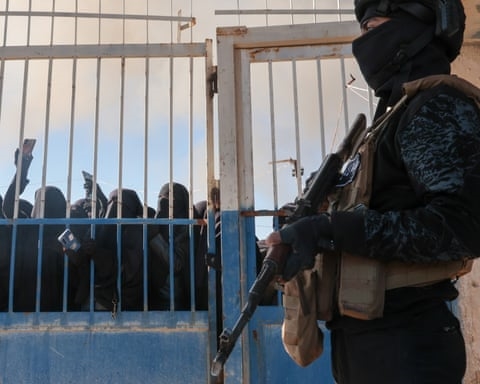
A significant shift in territorial control across northeastern Syria has created a precarious security environment, with international observers warning of a potential resurgence by the Islamic State militant group. The rapid advance of Syrian government forces into areas long held by Kurdish-led militias has disrupted the detention network for thousands of ISIS fighters and their family members.
In response to the instability, the United States military confirmed it has begun relocating detained ISIS combatants out of the conflict zone. An initial transfer of 150 individuals from a frontline detention facility to Iraq has been completed, with plans to move potentially thousands more to prevent mass breakouts. The prisons and sprawling displacement camps, which house foreign nationals from dozens of countries, have changed hands chaotically in recent days amid fighting.
Reports from the region indicate incidents of escapes. One prison in the town of Shaddadi saw an estimated 120 inmates flee after it was seized by Syrian forces, though officials claim to have recaptured a majority. Furthermore, the al-Hawl camp, which holds over 20,000 women and children linked to ISIS, is now under new management, with unconfirmed accounts suggesting some detainees have departed.
The Kurdish-led Syrian Democratic Forces (SDF), which served as the primary ground force against ISIS and subsequently administered these detention sites, has seen its authority erode rapidly. A fragile ceasefire is currently in place after government troops captured key urban centers. The political future of the SDF and the level of its integration into the state security apparatus remains a central point of negotiation.
Analysts monitoring the situation suggest the immediate danger is not the reformation of a declared caliphate, but the sparking of a dispersed insurgency. Experienced militants released into a contested security landscape between government and Kurdish forces could regroup. While the new leadership in Damascus has expressed intent to be a counter-terrorism partner, questions linger about its current capacity to securely manage the vast network of prisons and camps inherited from the SDF.
The international community, particularly European nations with citizens detained in the region, is observing the developments with acute concern. The breakdown of the established, though imperfect, security structure has introduced a new layer of volatility, with the enduring threat of ISIS taking advantage of the power transition.