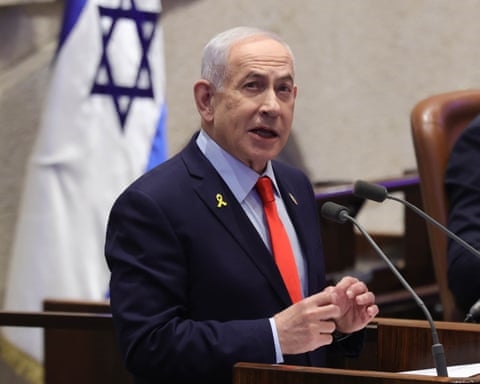
Israeli Prime Minister Benjamin Netanyahu has agreed to join a new international body proposed by the United States, a significant shift after his government initially raised objections to the group’s formation. The forum, described as a “board of peace,” is chaired by the U.S. president and is positioned as a mechanism for conflict resolution.
Initially framed as a limited group to oversee a ceasefire in Gaza, the initiative’s scope has reportedly broadened considerably. Proponents now suggest it could address disputes well beyond the Middle East, positioning it as a potential alternative to existing global institutions. This expansion has drawn scrutiny from diplomatic circles, with concerns that it could undermine the work of established organizations like the United Nations.
The Israeli prime minister’s office had previously criticized the composition of the forum’s executive committee, citing the inclusion of regional rival Turkey as being formed without its coordination and “contrary to its policy.” The acceptance marks a reversal of that stance. The move also comes amid domestic political pressure from coalition partners who have rejected U.S.-backed plans for Gaza’s postwar governance.
Participation in the board carries significant financial implications. According to a draft charter, member states wishing to extend their membership beyond an initial three-year term are required to contribute one billion dollars in cash funds. A number of nations, including the United Arab Emirates, Morocco, and Hungary, have already agreed to take part. Others, such as the United Kingdom and Russia, are reviewing invitations. Notably, Norway has publicly declined to join, stating the proposal “raises a number of questions” requiring further dialogue.
The draft charter grants substantial authority to the body’s chair, including the power to appoint members and, with certain procedural checks, to remove them. The document explicitly calls for a departure from international approaches and institutions perceived to have failed. This aligns with longstanding criticism from the U.S. administration toward multilateral organizations, following a recent announcement to withdraw from dozens of international treaties and bodies.
The Vatican has confirmed receipt of an invitation, stating a response would require careful consideration. As the forum takes shape, its evolving mandate and potential impact on the global diplomatic landscape continue to be a focal point of international discussion.