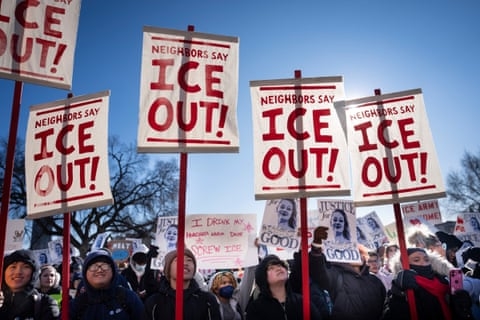
A powerful wave of civil disobedience swept across Minnesota on Friday as residents staged a widespread economic shutdown to protest a significant increase in federal immigration enforcement operations within the state. Organizers declared a “Day of Truth & Freedom,” urging a complete halt to normal activity—no work, no school, no shopping—to demand the removal of Immigration and Customs Enforcement (ICE) personnel and a full investigation into the agency’s conduct.
The protest movement gained momentum following the recent fatal shooting of an unarmed woman, Renee Good, by a federal immigration officer in Minneapolis. The coalition behind the action, which includes community groups, religious leaders, and major labor unions, has issued a clear set of demands: the immediate withdrawal of ICE from Minnesota, legal accountability for the officer involved in Good’s death, a halt to additional federal funding for the agency, and a probe into alleged human rights and constitutional violations.
In a striking show of solidarity, dozens of local businesses closed their doors, and the Minneapolis City Council formally endorsed the general strike. The day’s events were scheduled to culminate in a large afternoon march through downtown Minneapolis, an act of defiance organizers vowed to carry out despite forecasts of dangerously frigid temperatures.
“We are built for the cold here, and we will be there,” stated one labor leader, emphasizing the determination to proceed. “But the real story will be in the collective action—the individual acts of solidarity from every corner of our community.”
The state’s largest labor federation, representing over a thousand local unions, has thrown its full support behind the protest. Union officials cited a profound frustration with the lack of political avenues to halt what they describe as escalating enforcement actions. “When government offers no path to stop this violence, the people must find their own meaningful way to resist,” explained a local union president.
The solidarity extended into private homes and care networks. A childcare provider in Minneapolis, who spoke on condition of anonymity to protect the immigrant families they serve, reported shutting down operations after receiving overwhelming support from the parents. “Every family we serve, regardless of their circumstances, stood with this decision,” the provider said. “Even those who have been fearful of leaving their homes recognized the necessity of this stand.”
Federal authorities reported making thousands of arrests in Minnesota over the past six weeks, a operation supported by the deployment of thousands of additional immigration officers to the state. The Department of Homeland Security criticized the protest, accusing organizers of shielding “public safety threats” and highlighting arrests of individuals with criminal records.
However, national data indicates that immigrants with no criminal history continue to constitute the largest segment of the record-high population currently in U.S. immigration detention. The protest in Minnesota represents a significant grassroots challenge to these enforcement tactics, with organizers signaling their intent to inspire similar actions nationwide.