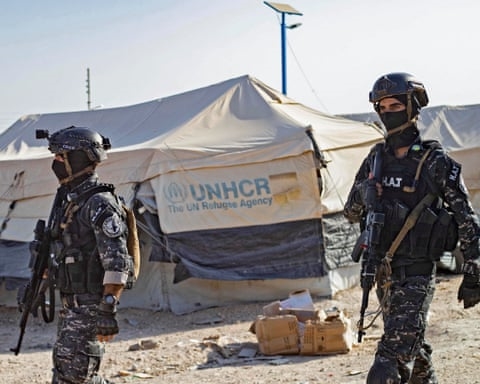
A major detention camp in northeastern Syria holding thousands of individuals with ties to the Islamic State militant group has been vacated by the Kurdish-led forces that long guarded it. This withdrawal coincides with a significant shift in U.S. policy and a rapid military advance by Syrian government troops into the region.
The al-Hawl camp, estimated to house around 24,000 detainees, including family members and foreign nationals considered highly radicalized, has been a persistent international security concern. Officials have repeatedly warned the facility could become a breeding ground for extremism if security collapsed.
A spokesperson for the Syrian Democratic Forces (SDF) stated their units were “forced to withdraw” from al-Hawl due to mounting pressures on other fronts and what was described as a failure by the global community to provide adequate support. The camp is now reportedly under the control of Syrian government forces.
This development occurred as Damascus’s military made swift gains over recent days, recapturing significant territory, including the cities of Raqqa and Deir el-Zour, from the SDF. The Kurdish-led force has now largely retreated to areas closer to the borders with Turkey and Iraq.
In a notable policy reversal, a senior U.S. diplomat announced that American support for the SDF as the primary ground force against ISIS has ended. The official stated that with the establishment of a new central government in Damascus, the original purpose of the SDF in that role is now obsolete.
Following the collapse of a recently signed ceasefire agreement, a new four-day truce was announced to allow for further negotiations. The terms reportedly include provisions that could see SDF representation in national institutions and a pledge that government forces will not enter majority-Kurdish urban centers.
Kurdish leaders have expressed deep apprehension, with one senior official accusing Damascus of planning a military campaign that could target Kurdish populations. In response, calls for a general mobilization have been issued in Kurdish areas, with reports of civilians preparing to defend their communities.
The SDF, which previously controlled roughly a third of Syrian territory with U.S. backing, was instrumental in dismantling the ISIS territorial “caliphate” in 2019. Its current retreat marks the most significant shift in the country’s frontlines in years. The Syrian government’s latest offensive has also brought crucial energy resources and infrastructure under its control.
With the SDF consolidating in Kurdish-majority zones where it maintains fortified positions, any breakdown of the current ceasefire and subsequent fighting in those areas is expected to be intense and costly.