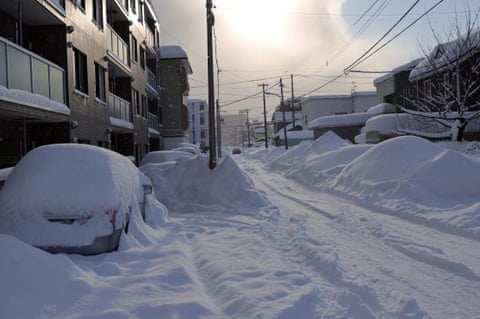
A snap general election in Japan, called for early February, is confronting an unexpected and formidable opponent: severe winter weather. With parts of the country buried under record snow, concerns are mounting that the brutal conditions could significantly depress voter turnout and disrupt electoral logistics.
The decision by Prime Minister Sanae Takaichi to dissolve the lower house for a quick election has created the shortest campaign period in recent memory. This compressed timeline, coupled with the extreme weather, is straining local authorities. Municipalities report difficulties in finalizing polling station arrangements, leading to overtime for election workers. In some northern areas, traditional campaign billboards have been completely submerged by snowdrifts, with one town forced to reduce its poster sites from over six hundred to fewer than one hundred.
The logistical challenges are compounded by safety concerns. The national police agency has issued warnings that common pocket hand warmers, essential for winter comfort, could trigger metal detectors at campaign speech venues. This has necessitated specific security arrangements, including ensuring female staff are present for potential body searches. Furthermore, the government has activated a task force to mitigate weather-related issues, promoting measures like mobile early voting stations and transportation assistance for election day.
Analysts suggest the confluence of cold weather, a short campaign, and a currently fragmented opposition could lead to pronounced voter apathy. Historically, lower turnouts have sometimes benefited the ruling Liberal Democratic Party (LDP). However, the political landscape has shifted. The LDP can no longer depend on the robust voter mobilization machinery of its former coalition partner, Komeito, meaning it must appeal more directly to unaffiliated voters who may be less enthusiastic.
Intriguingly, polling suggests a generational divide in attitudes toward the winter election. Voters in their 20s and 30s show greater acceptance of the timing compared to older demographics. This could potentially benefit smaller parties that have recently gained traction with younger voters. In contrast, regions accustomed to heavy winter snows are notably more opposed to holding a ballot at this time of year.
Acknowledging the hardship, Prime Minister Takaichi has expressed gratitude to voters, particularly those in snowy regions, for the effort required to participate. As the nation prepares to go to the polls, the outcome may hinge not just on political platforms, but on the ability of voters to literally weather the storm and reach their polling stations.