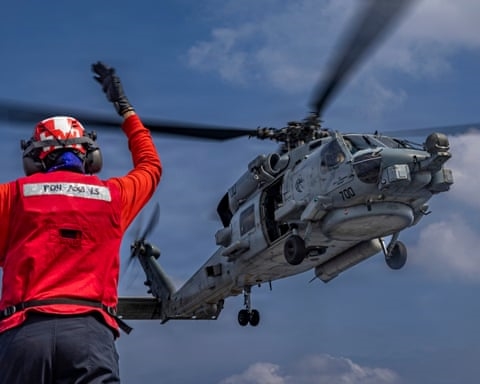
Regional stability is under severe strain as a significant deployment of American naval assets moves within operational range of Iran. Military analysts report that the arrival of a U.S. aircraft carrier strike group, supported by allied forces, has created a volatile standoff, raising fears of a potential military confrontation aimed at destabilizing the Iranian government.
The naval group, which includes advanced guided-missile destroyers, is now positioned to conduct operations. This mobilization occurs amidst a deep internal economic crisis within Iran, marked by soaring inflation officially reported at 60% last month. While external military action could theoretically exploit domestic unrest, observers note that public opposition to the longstanding political leadership does not necessarily translate into support for foreign intervention.
Diplomatic channels appear frozen. A senior Iranian security official has accused external powers of waging a campaign to fracture national unity as a precursor to conflict, alleging that certain domestic unrest is being manipulated to incite civil strife. Meanwhile, Iran’s foreign ministry has publicly dismissed rumors of ongoing backchannel negotiations, insisting its military is vigilantly tracking all foreign movements and will deliver a “comprehensive and regrettable” counterstrike to any act of aggression.
The international community remains divided on a path forward. In Europe, discussions are underway regarding potential sanctions against key Iranian military institutions. The human cost of recent domestic turmoil continues to be a point of intense dispute, with non-governmental organizations reporting thousands of fatalities, figures that cannot be independently verified due to severe restrictions on communication networks within the country.
The situation presents a complex dilemma for foreign powers: whether to pursue a strategy of forceful regime change in a nation of nearly 90 million people or seek de-escalation. With military assets in place and diplomatic options seemingly narrowing, the risk of a major escalation in the Persian Gulf region is considered higher than it has been in years.