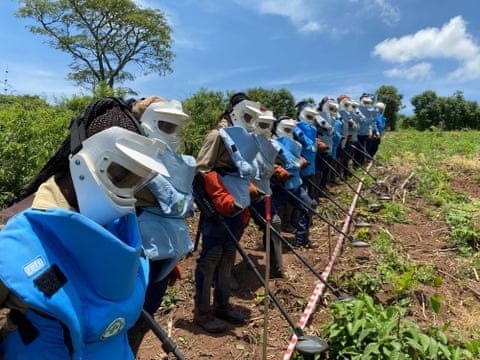
A critical effort to clear millions of deadly landmines along Zimbabwe’s border with Mozambique has been severely compromised, with sweeping international aid cuts forcing demining organizations to shut down operations and lay off hundreds of workers. The cuts have disproportionately impacted women, who made up a significant portion of the workforce and have now been plunged into financial crisis.
The border region remains one of the most heavily mined areas in the world, a lethal legacy of the 1970s liberation war. For decades, these hidden explosives have killed and maimed civilians and devastated livestock, rendering vast tracts of agricultural land unusable and perpetuating a climate of fear.
International charities, which had been making gradual progress in clearing these hazards, have seen their funding evaporate. Organizations like Apopo, which relied heavily on one major donor, were forced to cease operations entirely last year. Others, such as The Halo Trust, have had to drastically reduce their teams and scale back their lifesaving work.
The human cost of these closures is starkly embodied by former deminers like Hellen Tibu. At 22, her job clearing mines provided not only a rare and substantial income—exceeding that of many public sector workers—but also the means to support her entire family, including her parents and siblings’ education. Since being laid off, she has lost her home, can no longer afford school fees, and struggles to provide basic meals. She now survives by selling secondhand clothes at night.
“I was the breadwinner. Life became tough,” Tibu stated, describing the painful decision to move her sister to a cheaper school and into a crowded, unfamiliar township. Her story is echoed by colleagues like Marlin Gombakomba, a single mother who finds it a challenge to provide even two meals a day for her family since losing her demining salary.
For many of these women, the work was more than a job; it was a source of dignity and crucial financial independence, often for single mothers and widows. Furthermore, their role had direct personal significance, as women and girls are frequently the most vulnerable to landmine incidents while performing daily tasks like farming and collecting firewood.
Program managers from the affected organizations expressed profound regret over the layoffs, emphasizing that each lost position represents a setback for both a family’s survival and the community’s safety. They highlight the urgent need for sustained funding partnerships to prevent further job losses and to continue the vital, unfinished work of making the borderlands safe.
As schools prepare for a new term, Hellen Tibu focuses on a immediate, smaller goal: scraping together enough money for her sister’s exam registration fees. Her long-term hope, however, reflects a desperate new reality born of the funding crisis. “If an opportunity to clear landmines abroad comes,” she says, “I will grab it.”