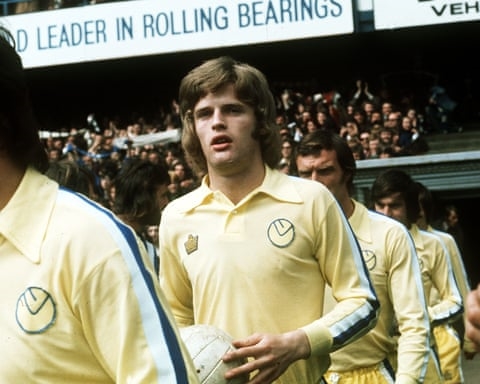
A coroner has concluded that repeatedly heading a football likely contributed to the brain disease that led to the death of former Scotland international Gordon McQueen. The defender, who played for Leeds United and Manchester United, passed away at his home last year at the age of 70.
The official cause of death was pneumonia, but the inquest heard this was a consequence of the player’s frail condition, brought on by a combination of vascular dementia and chronic traumatic encephalopathy (CTE). CTE is a degenerative brain condition associated with repeated impacts to the head.
In delivering his findings, the coroner stated it was probable that the cumulative effect of heading the ball during McQueen’s professional career was a contributing factor in the development of CTE.
During the proceedings, McQueen’s daughter recalled her father acknowledging in later life that his years of heading the ball had “probably not helped.” She described how he would sometimes return from training sessions suffering from headaches severe enough to require him to rest in a darkened room.
Following his death, McQueen’s brain was donated for research to a leading neuropathologist specializing in sports-related head injuries. The expert confirmed the presence of CTE and agreed that the player’s extensive history of heading the ball was the most significant contributing factor to the disease.
McQueen enjoyed a successful 16-year career, winning a league title with Leeds and an FA Cup with Manchester United, while also earning 30 caps for Scotland. After retiring, he moved into coaching and later worked as a television analyst.
The case adds to the growing medical and legal scrutiny surrounding the long-term risks of head impacts in contact sports.