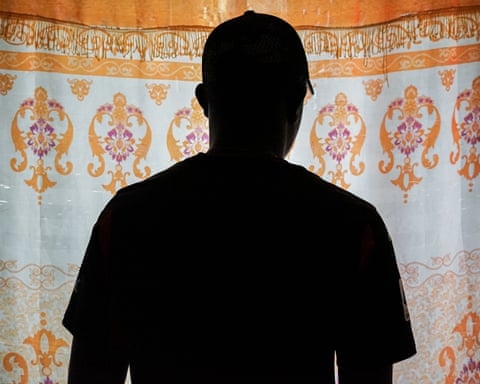
A disturbing pattern has emerged where young men from several African nations are being lured to Russia with promises of legitimate employment, only to be coerced into military service and deployed to the front lines of the conflict in Ukraine.
Individuals from countries including Kenya, Uganda, and South Africa have reportedly been targeted by recruitment networks. These operations exploit high domestic unemployment rates by advertising non-existent jobs online, often through local employment agencies. Upon arrival in Russia, their passports are frequently confiscated, and they are forced to sign documents in Russian—a language many do not understand—effectively enlisting them into the armed forces without their knowledge or consent.
One account from a Kenyan national details a harrowing journey. After being processed at a military facility and issued a military ID, he was transported to a region near the Ukrainian border. There, he and others were given uniforms and weapons and sent directly into combat zones without any military training. His duties involved attempting to shoot down enemy drones from forest positions, a task for which he was utterly unprepared. He described surviving each day as a “miracle,” living under constant threat.
The situation appears to be part of a broader effort to bolster military manpower. Reports suggest that over a thousand citizens from across Africa may currently be fighting within Russian ranks in Ukraine, with many now held as prisoners of war.
Disturbing footage circulating online, though unverified, appears to show African conscripts in perilous and degrading situations. In one clip, a man is seen being ordered at gunpoint to advance with an explosive device strapped to his chest. In another, armed men are filmed in a snowy forest while a voice off-camera mockingly refers to them as “disposables.”
The path home for those who survive is fraught with danger and bureaucracy. The individual who provided his testimony escaped only after being wounded by a drone attack that killed a fellow soldier. Following treatment in a military hospital, he managed to flee and sought help from his country’s embassy to secure emergency travel documents for repatriation.
Back in his home country, he faces the challenge of rebuilding his life, both physically recovering from his injuries and psychologically grappling with the trauma of combat. His story is not unique; families of other missing men are left in agonizing uncertainty, seeking answers from their own governments and foreign embassies with little success.
One mother has not heard from her son since he departed for what he believed was a security guard position. His last communication was a foreboding voice message and a copy of a military contract, sent before a combat mission from which he never returned. For months, she has received no official confirmation of his fate.
Diplomatic efforts are reportedly underway to repatriate affected citizens, but the scale of the deception and the complexities of an active war zone present significant challenges. The phenomenon underscores the vulnerabilities exploited by illicit recruitment networks and the devastating human cost of the conflict far beyond Europe’s borders.