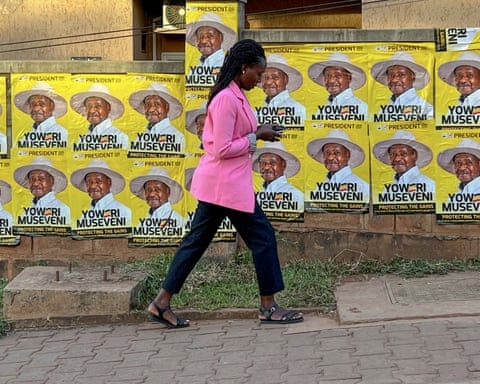
The recent confirmation of Yoweri Museveni’s extended tenure as president has solidified a sense of political inevitability for many of Uganda’s young citizens. With a significant majority of the population under the age of 35, the electoral outcome has been met less with shock and more with a weary resignation, dashing hopes for a new political direction.
For numerous young Ugandans, the core issues are economic. A pervasive lack of opportunity defines their daily reality, with official reports indicating a vast majority of graduates are unable to secure formal employment, often resorting to informal work. A 21-year-old university student expressed a common sentiment, stating her vote was cast for change due to bleak professional prospects, questioning how she will find work in a system she perceives as favoring personal connections over merit.
The president, in power since 1986, secured another term amid allegations of electoral irregularities, including a pre-election internet blackout. In the aftermath, the political climate remains tense. A leading opposition figure faces serious charges and is reportedly detained under concerning health conditions, a situation his family has decried as life-threatening.
This environment has led many to question the pathway to meaningful political reform. A 32-year-old opposition party official argued that the state apparatus is engineered to perpetuate the current leadership, leaving little space for a new generation. He pointed to economic pressures and joblessness as creating a cloud of uncertainty over the country’s future.
The disillusionment runs deep, with some activists noting that repeated electoral disappointments and past crackdowns on dissent have fostered a survivalist mentality among politically engaged youth. The belief that the ballot box alone can deliver change has been eroded, though not replaced by acceptance of the status quo. A 26-year-old opposition leader labeled the victory “stolen,” arguing it does not reflect popular will and predicting further hardship, not progress, in the coming years.
However, support for the administration persists among some young people, who prioritize stability and incremental development over political upheaval. A 26-year-old businessperson cited a need for predictability and pointed to infrastructure improvements, cautioning against swapping known leadership for potential chaos. A youth representative from the ruling party echoed this, urging young citizens not to “gamble” with proven governance.
Yet, for a significant portion of this demographic, the formal political process feels increasingly disconnected from their pressing daily struggles—finding work, managing living costs, and facing discrimination. An engineering graduate, who now drives a motorcycle taxi to make ends meet, encapsulates a widespread yearning. As a supporter of the main opposition, he has faced detention for displaying party colors. His demand is straightforward: “We need change, not just as young people but as a country.” He dreams of a professional future and a better life for the next generation, a transformation he believes is impossible under the current political framework.
The overarching sentiment suggests a generation caught between a desire for stability and a desperate need for economic opportunity and renewal, with many concluding that the latter requires a fundamental political shift that now seems more distant than ever.