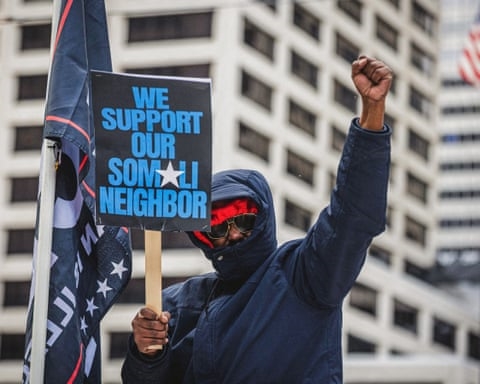
A climate of fear and uncertainty is gripping Somali communities across the United States, particularly in Minnesota, as federal immigration actions and hostile political rhetoric intensify. This focus represents a strategic shift in national immigration debates, with one group finding itself squarely in the crosshairs of a populist narrative.
Observers note that the current administration’s sustained focus on Somali-Americans appears deeply personal, yet politically convenient. The community’s profile—encompassing Black, Muslim, and immigrant identities—makes it a multifaceted target for intersecting prejudices. This has created a “perfect storm,” where a specific demographic is leveraged to justify broader anti-immigration measures. The animus is often publicly directed at prominent figures of Somali descent, but the repercussions ripple through everyday families, fostering a pervasive sense of vulnerability.
The trauma is not abstract. Reports from Minnesota describe parents, including those with U.S.-citizen children, fearful of routine activities like sending kids to school, worried about arbitrary detention. This environment inflicts a profound psychological toll, compounding existing generational trauma from past conflicts. The stress on social cohesion and child development is significant, creating a crisis of belonging and safety within one’s own community.
This situation is amplified by the uniquely connected nature of the global Somali diaspora. Forced from their homeland by civil war, families often scattered across continents during resettlement. This history forged exceptionally strong transnational bonds. A threat to a family member in Minneapolis is felt acutely by relatives in London or Nairobi. Community response is therefore networked and immediate, rooted in deep-seated family solidarities.
Despite the pressure, these very networks are also a source of resilience. Somali communities have a long history of grassroots organization. In Minnesota and elsewhere, they are not merely passive victims but active agents, pooling resources, providing mutual aid, and extending support to other immigrant groups. This internal strength is met with external solidarity from within their adopted homes. In Minnesota, a legacy of welcoming Cold War-era refugees has fostered a local culture that often stands in contrast to federal hostility. State and local institutions, along with citizen allies, have at times acted as a buffer, offering “opportunity and warmth” against a chilling national backdrop.
The current moment tests the durability of that civic fabric. The feeling that the “rule of law” is mutable and applied unequally erodes fundamental trust. Yet, within the anxiety, there is a hardened resolve. The community draws on its history of endurance, its intricate support systems, and alliances with broader civil society. They are braced for continued challenges, relying on tenacity and deep reserves of communal strength to navigate the storm.