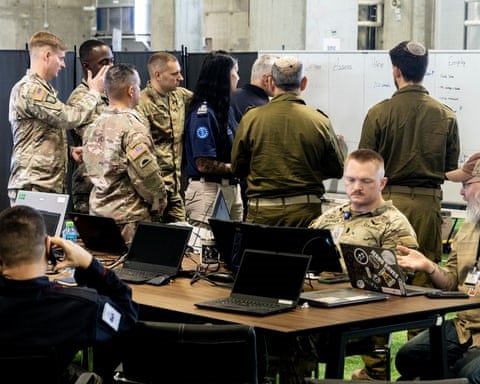
American military personnel and allied staff at a joint coordination center in southern Israel have raised serious concerns over extensive Israeli intelligence-gathering activities within the facility, according to sources familiar with the matter. The center was established to oversee aid delivery and stabilization planning for Gaza.
The situation reportedly escalated to the point where the senior U.S. commander at the site confronted an Israeli counterpart, demanding an immediate halt to the recording of meetings. Personnel from other nations stationed at the base have also been advised to limit the sharing of sensitive information due to surveillance risks.
While the Israeli military has stated that it maintains standard, transparent records of meetings in which it participates and denied gathering intelligence on partners, the alleged scale of monitoring has caused significant friction.
The coordination center, operational since last fall, was designed to facilitate humanitarian assistance and develop post-conflict frameworks for Gaza. Despite its multinational composition, which includes personnel from several allied nations, Palestinian representatives have been systematically excluded from its discussions. Attempts to include them via remote connections have been repeatedly disrupted, sources indicate.
On the ground, the mission has faced substantial challenges. While U.S. forces deployed with expertise in logistics and disaster response, they found that Israeli restrictions on goods entering Gaza presented a greater obstacle than operational hurdles. This has led to the departure of several dozen personnel within weeks of their arrival.
Discussions at the center have, however, led to some modifications of Israeli prohibitions on so-called “dual-use” items—materials like certain chemicals or construction components that are barred over fears they could be repurposed for military aims. Despite these minor adjustments, other basic supplies, including educational materials, remain blocked without clear justification.
The long-term relevance of the planning conducted at the center is now in question. Dozens of U.S. personnel have reportedly returned home after their initial assignments concluded. Furthermore, the plans developed in a political vacuum—without Palestinian involvement and amid a stalled ceasefire—face an uncertain future. The implementation of any proposed framework remains contingent on political developments that are currently deadlocked.
Many international diplomats and aid workers involved express ambivalence about their role at the facility. They worry the center lacks a clear international mandate, improperly blends military and humanitarian functions, and violates principles of inclusion. Yet, they also fear that withdrawing would cede planning entirely to the principal parties involved.