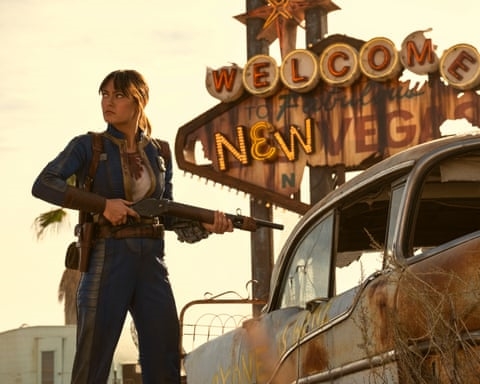
The second chapter of the Fallout television saga arrives this week, returning audiences to its uniquely grim and humorous post-nuclear America. The show’s initial success was a welcome surprise, deftly translating the video game franchise’s signature blend of retro-futurism, moral complexity, and irradiated peril into a compelling narrative. By following three distinct protagonists—an idealistic vault-dweller, a questioning knight in powered armor, and a morally desolate bounty hunter—the series captured the multifaceted experience of navigating its brutal world.
That first season concluded with major revelations about the origins of the Great War, while deliberately setting the stage for a more ambitious follow-up. The creative team, having cleared the notoriously high bar for video game adaptations, now faces heightened expectations.
“For the first season, the goal was simply to get it right,” notes Todd Howard, the executive producer from Bethesda Game Studios. “The response was beyond our hopes, so now the challenge is different—to build on that foundation with more confidence and scale.”
This new season shifts the action to the iconic setting of New Vegas, the heart of a fan-favorite game installment known for its rich storytelling and factional intrigue. The production sought to capture the essence of the Mojave Desert’s decaying glamour, filming on location to ground the spectacle in tangible reality.
“Honoring a location that players know intimately was a unique challenge,” Howard explains. “Time has moved forward in the story, so we explore what New Vegas has become, while ensuring fans of the original game will find a deep well of references, visuals, and faction dynamics to appreciate.”
A key philosophy behind the production has been a commitment to practical effects and physical sets, aiming to replicate the cobbled-together, scavenger aesthetic of the games. This extends even to its most fearsome creatures, which are often brought to life as intricate puppets rather than purely digital creations.
“The desire was always to make this world feel tactile and authentic,” says co-creator Geneva Robertson-Dworet. “When actors can interact with real environments or a physical creature, it translates to the screen. Of course we use visual effects, but the foundation is something real the cast can respond to.”
While the series is a collaboration between seasoned filmmakers and the games’ original creators, not every cast member immersed themselves in the source material. Walton Goggins, who plays the Ghoul, has openly stated he has never played the games—a fact the production takes in stride.
The release strategy for this season also marks a change, with episodes debuting weekly rather than all at once. The creators suggest this new chapter is broader, deeper, and packed with more surprises and dark humor.
“It’s a bigger journey with more layers,” Howard says. “We’re eager to see how audiences react to it week by week.”