The act of substitution in football is typically a routine, uncontroversial moment. Yet, the history of the game is littered with bizarre instances where a player’s departure from the pitch has itself become a disciplinary event, resulting in a highly unusual sending-off.
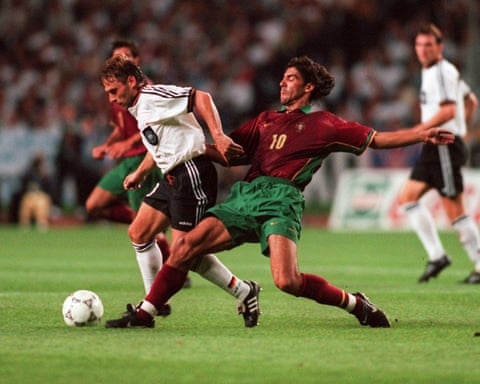
One of the most famous cases involves Portuguese maestro Rui Costa. During a crucial 1997 World Cup qualifier against Germany, with Portugal leading 1-0, Costa was substituted. His perceived time-wasting as he left the field prompted the referee to show a second yellow card. The dismissal occurred before his replacement could enter, forcing Portugal to finish the match with ten men. Germany equalised, securing their place at the 1998 World Cup at Portugal’s expense.
The phenomenon is not confined to the international stage. In a 1980 FA Cup tie, Stoke City’s Denis Smith, already cautioned, limped towards the touchline injured. His delay in exiting, as his substitute was not ready, was deemed time-wasting by the referee, earning Smith a second yellow and an early bath. More petulantly, Sheffield Wednesday’s Jermaine Johnson, after being substituted in a 2008 derby, kicked a water bottle into the crowd. Having already been booked, he received a second yellow for the incident, though the card was only shown after he had briefly left the pitch.
Perhaps the most stubborn example came from Clarence Seedorf during his time with Botafogo in 2013. Upon being substituted, Seedorf insisted on walking across the pitch to the distant dugout. The referee ordered him to use the nearest touchline. Seedorf’s initial refusal earned a first yellow. Believing the matter settled, he then proceeded on his original long route, prompting an incredulous referee to issue a second yellow for dissent, completing a uniquely self-inflicted dismissal.
These curious episodes serve as a reminder that in football, a player’s influence—and their capacity for misconduct—does not always end the moment their number is raised.