The decision to award the 1994 FIFA World Cup to the United States was met with profound skepticism on both sides of the Atlantic. The host nation, lacking a top-tier professional league and with a sparse World Cup history, was viewed less as a footballing heartland and more as a vast, untapped commercial venue. Critics abroad questioned whether American audiences would even attend, while domestic commentators openly scorned the sport’s global appeal. One prominent newspaper column at the time declared that disdain for soccer was a core part of American identity, ranking it above cherished national pastimes. Underlying this mutual doubt was a shared, unspoken concern: what if the tournament actually succeeded in sparking a genuine American passion for the game?
FIFA’s leadership saw the U.S. as the ultimate growth market, prioritizing commercial potential over tradition. This choice signaled a decisive shift in the sport’s governance, drawing criticism from purists who feared the game’s soul was being auctioned. The logistical challenges were immense, from laying natural grass over stadiums’ artificial turf to managing a tournament spread across a continent, with players enduring midday heat for European television schedules.
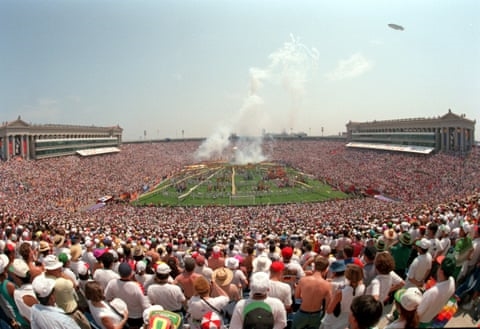
The spectacle of the opening ceremony in Chicago, hosted by major American celebrities under a blazing sun, was undercut by a series of farcical mishaps. More significantly, the event was virtually eclipsed in the national news cycle by the dramatic, televised police pursuit of a famous American football player turned murder suspect. It was an inauspicious start that seemed to confirm every prejudice about the tournament’s place in the American consciousness.
Yet, on the field, the competition unfolded with high drama. The final in Pasadena pitted Brazil against Italy, two nations with deeply contrasting football philosophies. Italy’s journey was orchestrated by a revolutionary coach, a former shoe salesman whose meticulous methods and intense superstitions defined their campaign. After a grueling cross-country trip following the semifinals, an exhausted Italian squad faced a Brazilian team led by the brilliant Romário.
The championship match was a tense, defensive struggle, unresolved after extra time, leading to the first World Cup final to be decided by a penalty shootout. The climax was cruel for Italy’s star player, who sent the decisive spot-kick soaring over the crossbar, securing Brazil’s fourth title. The victory, however, was met with a surprisingly muted reception back in Brazil, where the players’ return was marred by a petty dispute over import taxes—a sign of changing times and a more complicated relationship between the public and its sporting idols.
In retrospect, the 1994 tournament proved to be a watershed. The doubts about American engagement were answered by record-breaking attendance figures. The commercial gamble paid off, but more importantly, the event planted a seed. It provided the proof of concept and the infrastructure that led directly to the launch of Major League Soccer two years later, altering the American sporting landscape forever. Simultaneously, it cemented FIFA’s modern, commercial-driven trajectory, demonstrating that the future of the global game would be as much about markets as it was about magic. The World Cup that few believed in ultimately became one of the most consequential in the sport’s history.