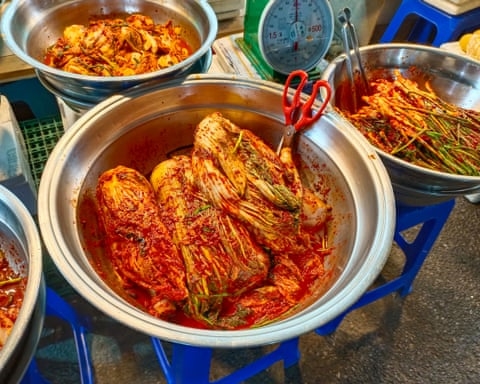
The sharp aroma of chili and garlic fills a traditional kimchi workshop near Seoul, where generations-old methods are under threat. The market for this iconic fermented dish, long considered the soul of Korean cuisine, is undergoing a profound shift. A surge of lower-priced imports, primarily from China, is now dominating commercial sales, leaving domestic producers fighting for survival.
Industry data reveals a stark imbalance. Over a recent ten-month period, the value of kimchi imported into South Korea significantly outpaced its exports. This gap highlights a growing consumer trend where price often trumps national origin, especially for restaurants and food service businesses operating on thin margins. Imported kimchi can sell for less than half the price of its domestically produced counterpart.
Kimchi is far more than a simple side dish. It is a culinary tradition with hundreds of regional and seasonal varieties, a process celebrated as a UNESCO-recognized cultural heritage. However, modern lifestyles are changing consumption patterns. With a sharp rise in single-person households and less time for the traditional, labor-intensive kimjang preparation, reliance on commercially produced kimchi has grown, even as overall consumption has dipped.
This shift has made the restaurant trade critical for local manufacturers, many of whom are small, family-run operations. Yet, they find themselves unable to compete on cost with large-scale foreign producers. “Staying afloat without losses is considered a success these days,” one veteran producer noted, explaining that reinvestment and expansion have become impossible for many.
The challenges are compounded by environmental factors. Climate change is disrupting cabbage harvests—a core ingredient—leading to volatile prices and supply instability for local farmers. While efforts are underway to develop hardier crop varieties and better storage, the question remains whether these steps can counteract the broader economic pressures.
In response, industry associations are exploring countermeasures. These include pilot subsidy programs to incentivize restaurants to source Korean kimchi and calls for stricter customs evaluations on imports. Government initiatives focus on promoting voluntary origin labeling and supporting agricultural resilience.
Despite the economic headwinds, producers maintain that the authentic quality and complex, fermented flavor of traditionally made Korean kimchi are irreplaceable. They argue that this craftsmanship, born from specific climates and culinary heritage, represents their most potent advantage in a globalized market. The struggle now is to ensure that this taste, and the culture it embodies, is not priced out of its own home.