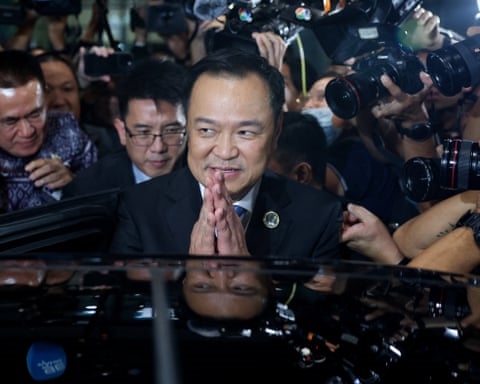
Thailand’s parliament will be dissolved, paving the way for a national vote within the next two months. The decision, announced by Prime Minister Anutin Charnvirakul, comes amid a severe political impasse with the country’s main opposition bloc and coincides with escalating military clashes along the Cambodian border.
The prime minister stated he was “returning power to the people,” a move that received royal endorsement. By law, an election must now be organized within 45 to 60 days. This accelerates a previously announced timeline, which had foreseen a vote in the spring.
The immediate trigger for the dissolution was a breakdown in the governing coalition. The prime minister’s Bhumjaithai party had secured its position with the support of the opposition People’s party, but that alliance has now collapsed. Government officials cited an inability to proceed with legislative business, while the opposition accused the ruling party of reneging on a prior agreement, which included pledges for constitutional reform.
This political upheaval marks the latest chapter in a period of prolonged instability for the nation, which has seen three different premiers since mid-2023. The persistent political uncertainty is applying significant pressure on an economy already contending with external trade challenges, elevated consumer debt, and sluggish domestic spending.
Simultaneously, the country is managing a serious military confrontation on its eastern frontier. For four consecutive days, exchanges of fire, including artillery, have occurred at multiple locations along the border with Cambodia. The clashes have resulted in significant casualties, with reports indicating dozens killed and hundreds wounded, prompting civilian evacuations from affected areas.
The government has sought to assure the public that the political transition will not impact military operations or the national response to the border crisis. However, the confluence of a domestic political crisis and an active international conflict presents a formidable dual challenge for the Southeast Asian nation as it heads to the polls.