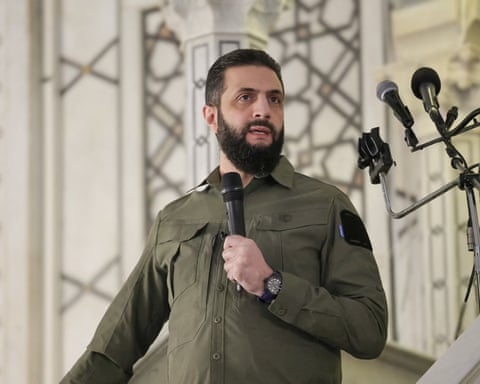
One year after a historic political transition, Syria’s president is confronting the immense challenge of converting unprecedented global engagement into concrete improvements for his war-ravaged nation.
The international diplomatic embrace has been swift and broad. Since taking office, the president has embarked on over twenty foreign trips, attending major global forums and Arab summits. In a powerful symbolic gesture, envoys from the entire UN Security Council recently gathered in Damascus—a stark contrast to the body’s deep divisions over Syria for more than a decade. This outreach signals a widespread desire to see a stable Syria re-enter the community of nations.
However, the true measure of success lies not in handshakes abroad, but in progress at home. The core challenges remain formidable: lifting the complex web of international sanctions, establishing internal security, and shielding the country from external interference. Significant financial pledges, particularly from Gulf states, are contingent on sustained domestic reconciliation and distancing from extremist ideologies. The nation’s economic picture remains so unclear that its own central bank cannot confirm the size of the economy.
The president has secured a surprising and vocal ally in a former U.S. leader, who has promised support and played down the Syrian leader’s controversial past. This relationship has opened doors, including high-level intelligence cooperation against militant groups. Yet, this external backing has not insulated Syria from regional pressures.
To the south, frequent military actions by a neighboring state continue, based on claims of terrorist threats. Damascus fears these operations aim to permanently weaken the state. To the north, a key ally demands the disarmament or full assimilation of powerful Kurdish-led forces, which control a quarter of Syrian territory. These forces, trained for years by an international coalition, are wary of integration, fearing it would leave them exposed.
The process of folding these Kurdish units into the national army has stalled. Kurdish leaders argue that the solution is linked not to Damascus, but to peace talks happening elsewhere, suggesting that a resolution to a long-standing ethnic conflict in a neighboring country would naturally ease tensions within Syria.
After serving as a battleground for proxy conflicts and foreign powers for years, Syria’s path to full sovereignty and stability remains fraught. The world is watching to see if its new leadership can transform diplomatic goodwill into lasting peace and prosperity for its people.