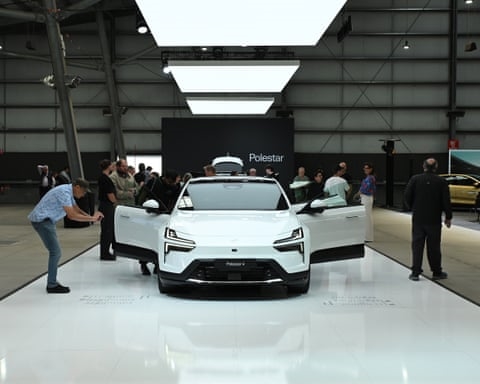
As debate intensifies over the European Union’s planned 2035 phase-out of new internal combustion engine cars, the leadership of two major Swedish automotive companies is issuing a stark warning. Executives from Volvo Cars and Polestar argue that any delay to the deadline would be a strategic misstep, undermining Europe’s industrial competitiveness and inadvertently strengthening the position of Chinese manufacturers.
The controversy centers on calls from some European capitals, notably Berlin, to soften the 2035 target. Proponents of a delay cite consumer hesitancy and request allowances for advanced hybrid and efficient combustion engines beyond that date. However, Swedish industry voices contend this approach risks cementing technological stagnation.
“The notion of pausing or rolling back the 2035 target is fundamentally flawed,” stated the CEO of Polestar, the continent’s sole all-electric carmaker. “If Europe relinquishes leadership in this transformation, other global players will swiftly fill the void. We cannot afford to hit the brakes.”
The sentiment is echoed at Volvo Cars. The company’s chief executive drew a historical parallel, suggesting industry resistance mirrors past opposition to mandatory safety and environmental technologies like seatbelts and catalytic converters. “Regulatory clarity drives progress,” he noted. “Slowing down the electrification timeline doesn’t solve challenges; it merely widens the gap for competitors who are charging ahead.”
A primary concern raised is the rapid advance of Chinese electric vehicle producers, who are already establishing manufacturing footholds within the European Union. The argument is that tariffs alone cannot protect the European market; only innovation and a committed transition can ensure long-term viability for the region’s auto sector.
“Competitors in China and other markets are not pausing their development,” the Polestar CEO emphasized. “Any signal of wavering ambition from Brussels directly endangers European industrial capacity and employment.”
Both executives express confidence that remaining consumer concerns about electric vehicles—namely driving range, charging speed, and purchase price—are being addressed through rapid technological improvement. They point to existing models capable of over 500 miles on a single charge and assert that fast-charging infrastructure will soon match the duration of a typical motorway rest stop.
The broader critique extends to the pace of climate action itself. One executive questioned the efficacy of endless political discussions compared to tangible engineering breakthroughs. “Real-world innovation, not just dialogue, is what will deliver environmental progress,” he said. “Electrification represents that rare convergence: a solution that is both crucial for the climate and increasingly desirable for the customer.”
The message from Sweden is clear: Europe must maintain its course on electrification. To alter it now, they argue, would be to surrender hard-won momentum and compromise the future of its automotive industry in an increasingly competitive global landscape.