A planned $1.6 million medical study, funded by the United States and set to take place in Guinea-Bissau, is facing intense criticism from the global public health community. Experts are labeling the research as unethical and scientifically questionable.
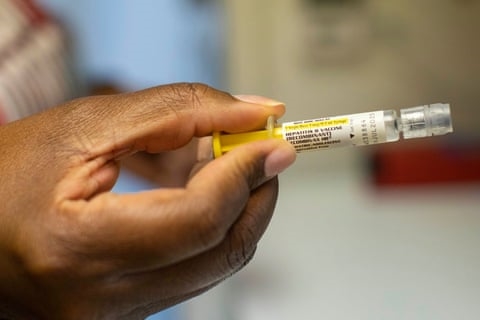
The study, scheduled to begin in early 2026, will involve a randomized trial where some newborns will receive the hepatitis B vaccine at birth while others will not. Researchers will then compare health outcomes between the two groups. The World Health Organization universally recommends the hepatitis B vaccine for all newborns, a practice proven over decades to be safe and highly effective in preventing a virus that can cause lifelong liver disease and cancer.
The controversy stems from several factors. Guinea-Bissau has one of the world’s highest rates of hepatitis B, with nearly one in five adults infected. When infants contract the virus, their risk of developing severe complications is dramatically higher than for adults. Public health officials argue that conducting a trial which withholds a proven protective intervention in such a vulnerable population is a fundamental breach of medical ethics.
“This is not a question that needs answering,” stated one prominent vaccinologist. “We already have overwhelming evidence that the birth dose saves lives. To deliberately withhold it from children in a high-risk setting is unconscionable.”
Further scrutiny has fallen on the research group selected to conduct the trial and the nature of the study’s design. The investigation will be led by a Danish research team whose past work on vaccines has been the subject of significant debate and methodological criticism within the scientific literature. The trial’s focus—examining vague “overall health effects” rather than the vaccine’s proven ability to prevent infection—has raised concerns that the study is structured to find predetermined, negative outcomes rather than to address a legitimate public health question.
Critics also highlight a troubling political context. The U.S. funding for this trial follows recent domestic policy shifts that downgraded the urgency of the hepatitis B vaccine for American newborns, a move contrary to longstanding scientific consensus. Simultaneously, the U.S. has significantly cut its contributions to international vaccine alliance programs that deliver lifesaving immunizations to low-income countries.
“This sequence of actions sends a devastating message,” said a professor of global health policy. “It suggests a willingness to withdraw broad support for protecting children’s health globally, while selectively funding research in a fragile health system that could justify those very cuts. It exploits a population for a political agenda.”
The study’s design adds to the unease. It is “single-blinded,” meaning the research team will know which infants did not receive the vaccine, a setup that can introduce bias into data collection and analysis. Statisticians note that testing broad, non-specific health outcomes carries a high risk of producing misleading, false-positive results.
The overwhelming consensus among independent scientists and health organizations is that the priority in Guinea-Bissau—and across sub-Saharan Africa where birth dose coverage remains low—should be strengthening delivery systems to ensure every newborn receives this critical vaccine. They argue that diverting resources to a redundant and ethically fraught trial jeopardizes lives and undermines trust in public health institutions.
As one expert concluded, “Children will pay the price for these decisions. We have a tool that prevents a deadly disease, and instead of deploying it fully, we are choosing to experiment. It is a profound failure.”