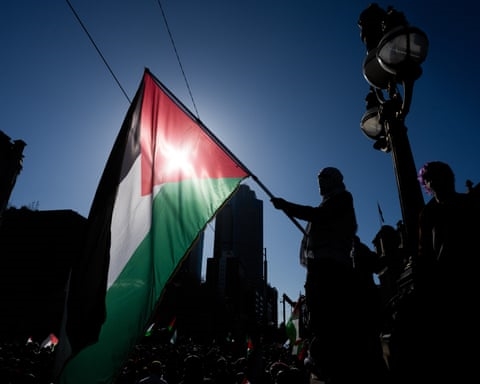
A proposal to outlaw the slogan “globalise the intifada” has ignited a fierce debate in New South Wales, pitting concerns over public safety and hate speech against arguments for free expression and linguistic nuance.
The state government, led by Premier Chris Minns, has announced its intention to ban the phrase, labeling it “hateful, violent rhetoric.” The premier has drawn a direct connection between the slogan’s use and a recent, unrelated terrorist attack, arguing that such language can incite real-world violence. However, the specific legislative mechanism for the ban remains unclear, with further details expected to be examined by a parliamentary committee next year.
The controversy mirrors similar disputes overseas. Authorities in the United Kingdom have recently made arrests related to the chant, and it became a point of contention in a recent New York mayoral race.
At the heart of the disagreement is the word “intifada,” an Arabic term meaning “uprising” or “shaking off.” It is historically associated with two major periods of Palestinian resistance against Israeli occupation. For many pro-Palestinian activists, the call to “globalise the intifada” is an expression of international solidarity with an oppressed people.
“It’s a basic act of supporting Palestinian uprisings against illegal occupation,” said one protest organizer, who views the slogan as a legitimate political statement.
Conversely, many within the Jewish community and among terrorism experts hear a starkly different message. They associate “intifada” explicitly with waves of suicide bombings and terrorist violence that targeted Israeli civilians. Critics argue the phrase glorifies terrorism and is inherently threatening, with one expert stating it is “anti-peace, pro-violence, and specifically pro-terrorism.”
Legal and academic experts warn that legislating against such a politically and semantically contested term is fraught with difficulty. They caution that criminalizing a phrase with multiple interpretations risks silencing legitimate political discourse and could face significant legal challenges in court.
“The danger is in locking in one interpretation of a contested phrase as automatically criminal,” noted a university professor specializing in hate speech law. “That is a problematic development for the law.”
Further criticism has emerged from scholars of the region, who argue that the debate is being shaped without proper understanding of the term’s linguistic and historical context within Arab communities. They warn that such bans can be perceived as an attack on language and history, potentially deepening social divisions.
The government’s push has drawn condemnation from civil liberties groups and pro-Palestine supporters, who accuse officials of conflating peaceful protest with terrorism. As the proposal moves forward, it sets the stage for a complex clash over the limits of free speech, the power of language, and the politics of the Middle East conflict as it resonates on Australian streets.