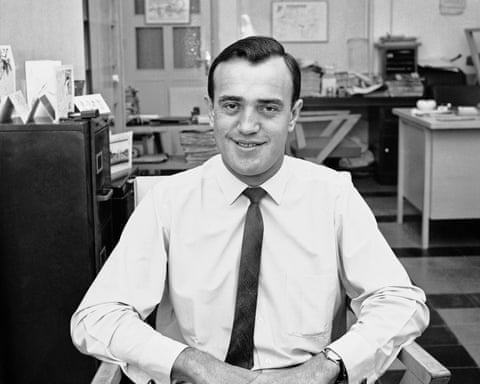
Peter Arnett, the celebrated journalist whose fearless frontline reporting from Vietnam to Iraq brought the stark realities of war into homes worldwide, has died at the age of 91. He passed away in Newport Beach, California, after a battle with prostate cancer.
Arnett’s career, defined by a willingness to report from the heart of conflict, earned him journalism’s highest honors and made him a globally recognized figure. He was awarded the Pulitzer Prize for International Reporting in 1966 for his gripping dispatches from Vietnam for the Associated Press.
While his byline was well-known within journalistic circles during the Vietnam era, it was his coverage of the 1991 Gulf War for CNN that cemented his public reputation. As other foreign journalists evacuated Baghdad ahead of the U.S.-led offensive, Arnett remained. From his hotel room, he delivered historic live broadcasts via telephone as missiles struck the Iraqi capital, his calm narration punctuated by the sounds of air raid sirens and explosions.
His proximity to danger was a hallmark of his work. In 1966, while embedded with a U.S. Army battalion in Vietnam, he was standing beside Lieutenant Colonel George Eyster when the officer was fatally shot by a sniper, an event Arnett would later recount with vivid detail.
Arnett’s path to the world’s battlefields began in his native New Zealand, where he took his first newspaper job. A planned move to London was diverted by a stop in Thailand, where he began working for English-language papers in Southeast Asia. This led to a position with the Associated Press, first in Indonesia—from which he was expelled after a critical economic report—and then in Saigon in 1962.
In Vietnam, he worked alongside other journalistic luminaries, learning the craft and survival skills that would serve him for decades. He remained in the country until the fall of Saigon in 1975. Defying orders to destroy the bureau’s files as the war ended, he preserved them, believing in their historical significance; they now reside in the AP’s archives.
After leaving the AP in 1981, Arnett joined the nascent CNN. His tenure there included exclusive, though contentious, interviews with figures such as Saddam Hussein and Osama bin Laden. He resigned from the network in 1999 following a controversy over a retracted report he narrated but did not produce.
His career faced another pivotal moment in 2003 while covering the Iraq War for NBC. He was dismissed after giving an interview to Iraqi state television in which he criticized U.S. war strategy, remarks that sparked fierce criticism at home. Undeterred, he was reporting for international broadcasters within a week.
Arnett authored a memoir, Live From the Battlefield, in 1995. In his later years, he taught journalism at Shantou University in China before retiring to California with his wife, Nina Nguyen.
He is remembered as a correspondent who believed the story was found at the front line, a principle that guided his work across generations of conflict. He is survived by his wife and their two children.