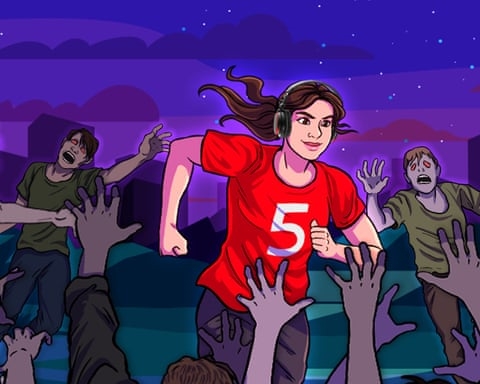
The decision to acquire the studio behind a beloved narrative running game wasn’t a calculated business move. It was a commitment to an idea: that genuine human connection, not just code, is the heart of compelling interactive experiences.
This game, which turns a routine jog into a mission in a zombie-infested world, began as a simple collaboration. The goal was to make exercise engaging by wrapping it in a story where every sprint or long-distance run has purpose—rescuing a survivor, securing vital supplies, or uncovering a mystery. The response revealed something profound. Players didn’t just log miles; they formed attachments, reporting they’d laughed during a hill climb or felt a pang of emotion mid-stride. The mechanism was fitness, but the engine was storytelling.
There’s a prevailing trend in the industry to quantify narrative like a commodity—boasting about word counts or hours of content. But that confuses volume for value. A powerful story isn’t sold by the yard; it’s captured in a moment: a strange man in an attic, a cryptic note left behind, a garden waiting to be revived. It’s the hook that lingers, the human spark that makes an audience lean in.
This is where the current push toward generative AI as a substitute for writers feels particularly hollow. Automated tools can assemble functional text, but they cannot replicate the unique alchemy of human experience. Storytelling is, at its core, an act of shared understanding. We see ourselves in the struggles and triumphs of characters; we feel less alone. That resonance comes from idiosyncrasy, not uniformity. It requires a writer’s lived insight, their empathy, and their singular voice.
The future of this narrative universe, therefore, won’t be found in chasing technological trends alone. Its strength has always been in its ethos—a world where survival depends on cooperation, not isolation. Moving forward, that means exploring new kinds of post-catastrophe stories. Perhaps a quest to restore beauty by rebuilding a library or tending a forgotten garden. These aren’t tales of mere survival, but of rebuilding meaning. In many ways, that feels like a necessary narrative for our time.
The gaming industry is the dominant force in global entertainment. To command lasting respect, it must move beyond marketing its scale and start championing its substance. Confidence in the medium means believing a well-told story, one that connects on a fundamentally human level, is worth more than any metric of sheer volume. The goal isn’t just to keep players occupied, but to make them feel seen.